
The Chlorinated Chicken Debate
30p Lee and the Case of the Salad Spin
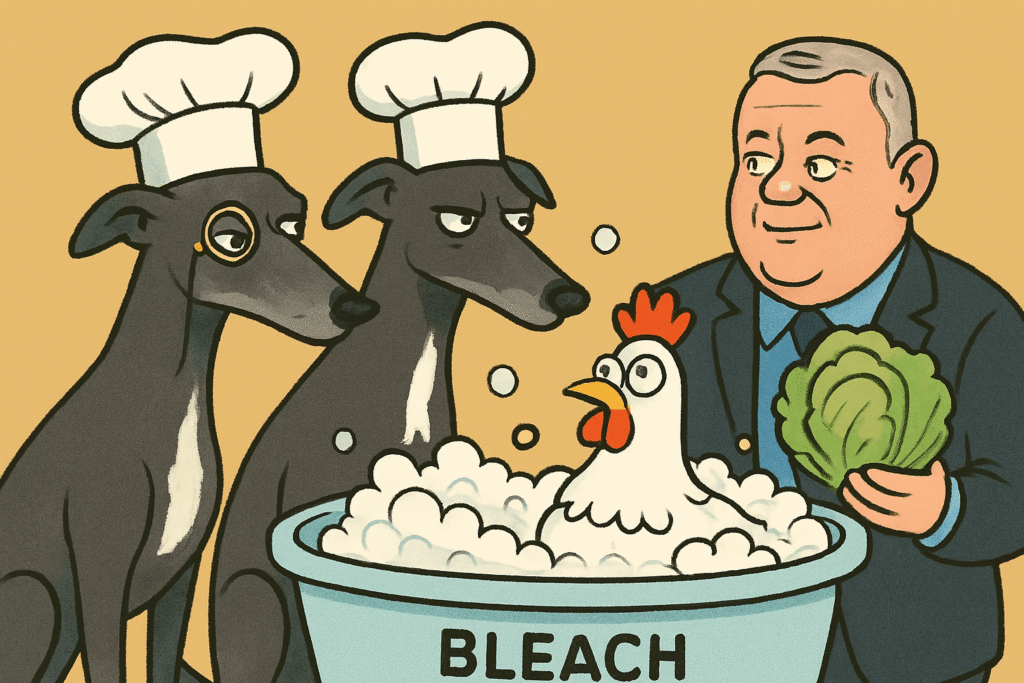
Reform UK’s 30p Lee Anderson has stirred up the chlorinated chicken debate by claiming that if we’re happy to chlorinate salad, we shouldn’t complain about US chicken imports. Issy pricked up her elegant greyhound ears, while Poppy promptly hid behind the sofa, muttering that lettuce doesn’t live in a barn full of droppings.
Chlorinated Chicken Explained: Food Safety and Welfare Concerns
In the United States, chlorine-washed chicken is common, where carcasses are soaked in a chlorine-based solution to kill Salmonella and Campylobacter. While the chemical itself isn’t especially harmful, the process highlights industrial poultry farming conditions.
Many US poultry farms operate on a large scale with crowded chicken sheds, rapid processing lines, and subpar animal welfare standards. The chlorine rinse acts as a safety net for messy production.
By contrast, the UK and EU ban chlorinated chicken, preferring to ensure food safety and hygiene through proper farm-to-fork practices. In other words, we prevent contamination at the source instead of relying on a chemical wash.
Salad vs Chicken: Why the Comparison Fails
Mr Anderson’s claim that chlorinated salad is equivalent to chicken doesn’t hold up. Salad gets a brief rinse to remove surface bacteria, while chlorine-washed chicken is a full chemical bath to offset poor hygiene. It’s the difference between rinsing vegetables and fumigating the kitchen.
Issy raises an eyebrow: “You can’t compare lettuce leaves to leg meat.” Poppy sighs and curls up, unimpressed by yet another half-baked food standards argument.
Fast Food, Takeaways, and Hidden Chlorinated Chicken
While Nigel Farage insists shoppers should choose for themselves, the reality is murkier. Most people don’t buy raw chicken at the supermarket — they eat it in fast food outlets, ready meals, or takeaways, where US or imported poultry can end up on the plate.
By the time chicken is processed, cooked, and boxed, the origin is often invisible. Issy sniffs the problem: “You can’t exactly ask for provenance when your nuggets come pre-battered.” Poppy adds, trembling slightly: “And that’s before you get to the chlorine.”
The debate isn’t just about chemical washes; it’s about transparency, labeling, and food standards in the meals we eat every day.
Reform UK and Nigel Farage: Politics Behind Chlorinated Chicken
Reform UK leader Nigel Farage has argued that chlorinated chicken imports should be allowed in Britain, claiming consumers already accept chlorine-washed lettuce and poultry from Thailand. He insists shoppers should decide for themselves.
Past ministers have flirted with loosening restrictions. Liam Fox suggested accepting US poultry in a trade deal, while Michael Gove called it a “red line.” Even The Spectator described chlorinated chicken as a small price to pay for a US trade deal.
UK Food Standards and the May 2025 UK–US Trade Deal
Yet the overwhelming political consensus is against it. In the May 2025 UK–US trade agreement, chicken was excluded to protect UK food standards. Britain remains chlorine-free… for now.
The Chlorinated Chicken Debate
Issy is fine with a splash of lemon on her greens but prefers her poultry clean before the chlorine. Poppy, ever cautious, thinks if politicians scrubbed their arguments as thoroughly as US chicken, we might finally get something safe to swallow.
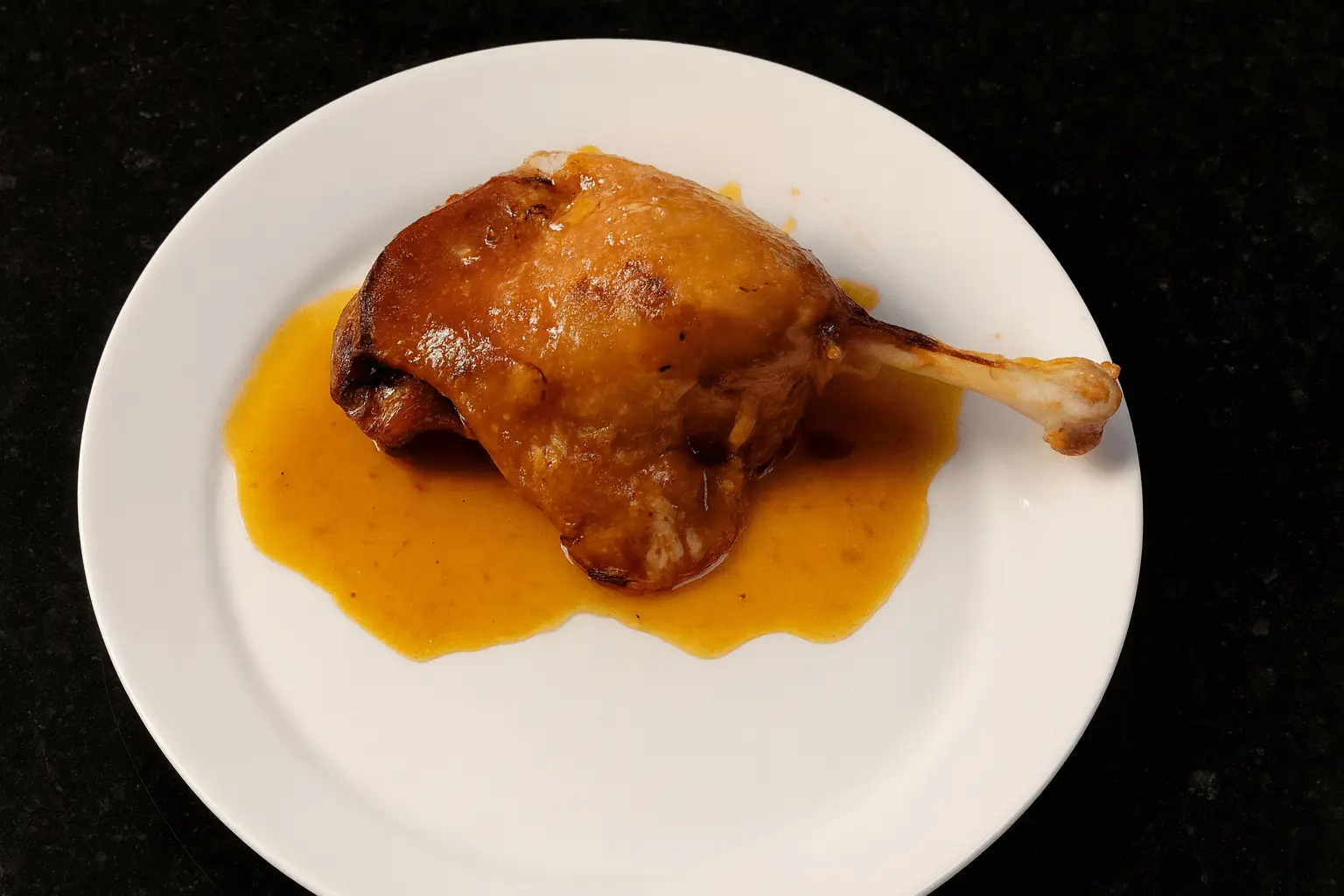
For now, the girls stick with Spanish chicken — air, not chlorine, cured.
And before anyone asks — no disclaimer needed. This satirical dispatch speaks for itself.
More from the Issy & Poppy Investigate series here.


Stick it to these shysters, Issy & Poppy. They need calling out for what they are. Keep up the brilliant work.
MD