
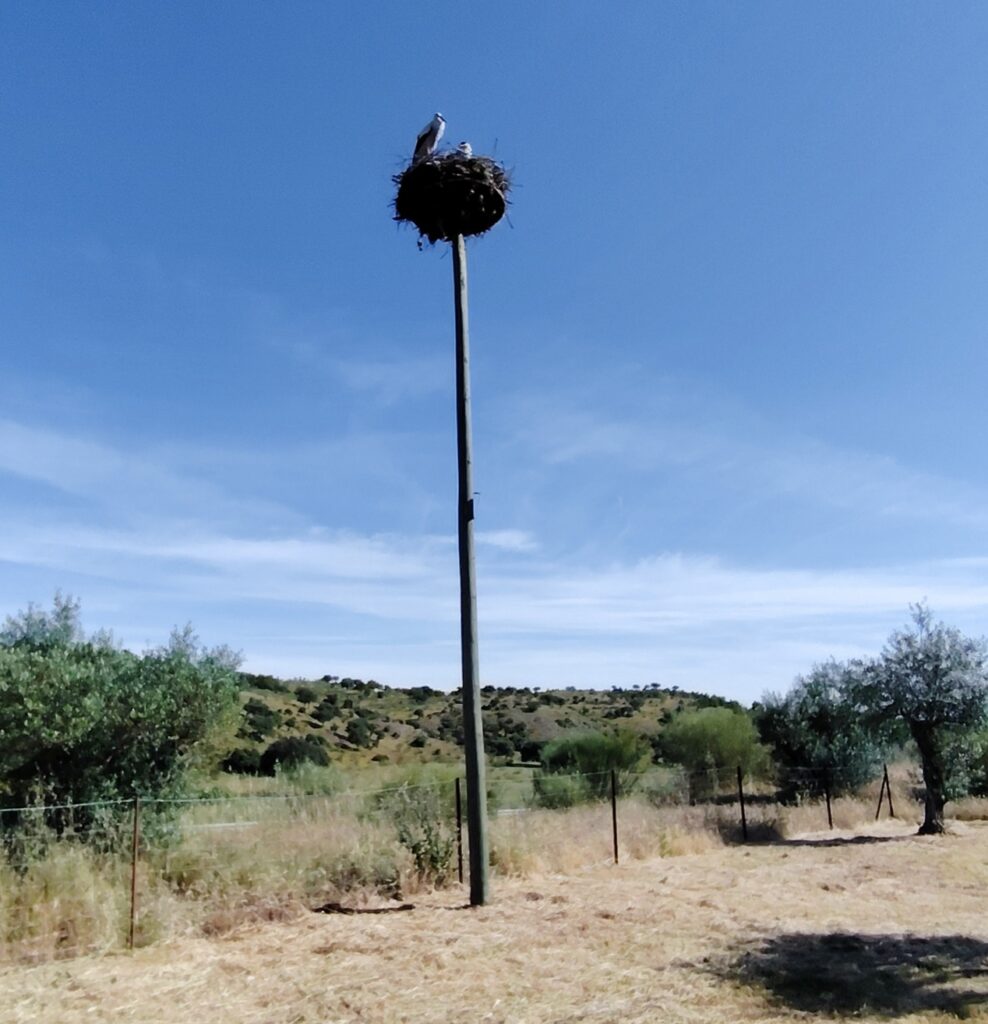
While parked at the Venta del Caldero motorway services near Plasencia, we were treated to a remarkable sight: white storks (Ciconia ciconia) nesting on tall poles. These large, majestic birds are a common feature in Spain, especially in areas like Plasencia, where artificial nesting platforms have been installed to support their breeding.
These towering poles are part of a wider conservation initiative aimed at aiding species like white storks and herons, particularly the grey heron (Ardea cinerea). In regions where natural nesting sites, such as tall trees, are becoming less abundant, artificial structures are a welcome solution. They provide these birds with safe, elevated spots to build their nests, away from potential ground predators.
White storks, known for their distinctive black-and-white plumage and long legs, are particularly fond of man-made nesting sites. The poles at Venta del Caldero are designed specifically for them, offering an ideal platform to raise their young. The conservation efforts to support these birds have proven successful, as many species now thrive in these artificial habitats.
If you're planning to observe the storks, consider visiting during the breeding season, which runs from late winter through early summer. This is the time when you’ll see the adult storks caring for their fledglings, giving you the perfect opportunity to witness the circle of life up close. Just be sure to keep a respectful distance to avoid disturbing the birds while they nest.
It's incredible to think back to the day we first spotted the storks, just 17 days ago. Their fledglings have grown remarkably since then, and it's heartening to see how well these artificial platforms are supporting the birds' natural behaviours and helping maintain healthy populations in the region.
I hope to encourage storks and other birds to my plot of land at Hermoso Campo.


