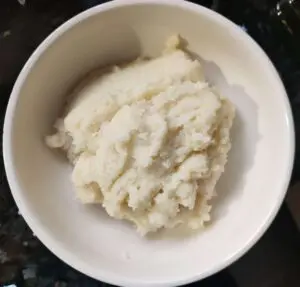
Some batches have a plan. This one had a deadline — and Marta had mangoes. The result is Mango Ember, a fermented mango hot sauce that started with 69 days of patience and ended with four jars of something genuinely good.
Mango Ember is a fermented mango hot sauce built on a 69-day, 2% brine ferment of mixed long chillies and scotch bonnets, finished with fresh mango, pineapple, and a glug of extra virgin olive oil. It started because the chillies had been in brine since 21 February — long reds, oranges, yellows, and a few scotch bonnets, packed with garlic, onion, carrot, and a little pineapple. By the end of April they were ready. All I needed was something to build the sauce around. Marta's store had mangoes. That was that.
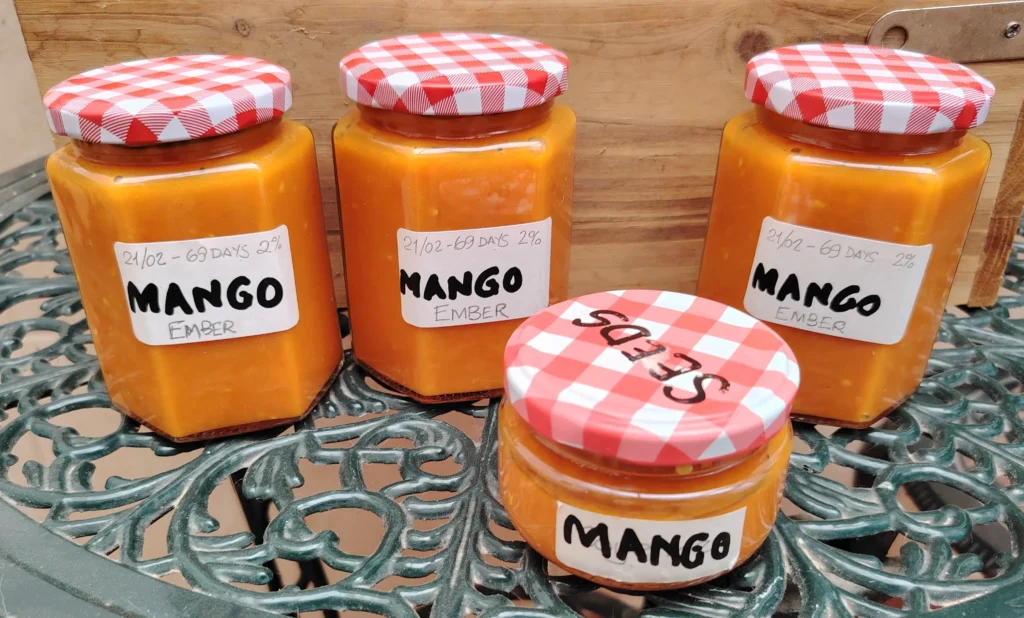
The 69-day ferment gives the sauce a clean lactic tang that the mango softens without smothering. The scotch bonnets are in there, and you know about it, but the fruit pulls them back just enough to make the sauce spoonable rather than punishing. Deep golden-orange, thick, and glossy — four jars from one long, patient ferment.
The chef's jar didn't last the week.
How to Make Mango Ember Fermented Hot Sauce
Yield: approximately 900 ml — 3 × 250 ml jars plus a chef's jar
The Ferment
Fermented 21 February to 30 April — 69 days at 2% brine
- Mixed long red, orange, and yellow chillies
- A few yellow scotch bonnets
- 3–4 garlic cloves
- 1 small onion, roughly chopped
- A few carrot slices
- A small piece of fresh pineapple
- 2% fine sea salt brine (8 g salt per 400 ml filtered water)
Pack everything into a 750 ml jar. Dissolve the salt in a small amount of filtered water, top up until the solids are fully submerged. Use filtered water — tap water contains chlorine which inhibits fermentation. Weight the solids below the brine line, cover loosely, and ferment at room temperature for 69 days.
I use my Ecofiltro — a gravity filter that sits on the worktop and needs no power.
To Finish
- 520 g drained fermented solids
- 350 g fresh mango, roughly chopped (plus 1 small mango added during adjustment)
- 1 slice fresh pineapple
- 20–30 g cooked carrot
- 30–50 ml reserved ferment brine
- Splash of apple cider vinegar
- Glug of extra virgin olive oil
Method
- Drain the ferment — Tip the fermented contents into a sieve over a bowl. Drain well and reserve all brine. Final drained solids weight: 520 g.
- Cook the carrot — Simmer the carrot until soft, drain, and cool.
- First blend — Add the fermented solids, 350 g mango, cooked carrot, and 30 ml brine to a blender. Blend hard until smooth and spoonable.
- First adjustment — Taste. If the top-note acidity is sharp, add more mango and the slice of pineapple. Blend again.
- Second adjustment — Add a splash of apple cider vinegar and a glug of extra virgin olive oil. Blend thoroughly to emulsify and round the flavour.
- Check — The sauce should be smooth, glossy, spoonable, and balanced. Final volume approximately 900 ml.
- Jar — Fill sterilised jars while still warm. Reserve the last 150 ml as your chef's jar. Label with the date.
The Flexible Chef Tip: The EVOO is not decoration — it emulsifies the sauce and softens the acidity in a way that water or more brine simply can't. Don't skip it. And taste as you go: the adjustment steps are where the sauce becomes yours.
Final Profile
This fermented mango hot sauce delivers a warm, rounded heat with a long finish. Acidity: clean lactic tang from the 69-day ferment, softened by mango and EVOO. Fruit: mango forward but not sweet; pineapple adds a bright top note. Texture: thick, spoonable, glossy. Colour: deep golden-orange.
Use this fermented mango hot sauce alongside grilled chicken, spooned over tacos, or straight from the chef's jar with anything that needs a lift.
This post is part of the Fermentation Hub. It joins Tropical Sunset in my growing Ferment Series, which you can explore in the Fermentation Hub — a space where I'm gathering all my experiments, notes, and lessons learned.
Keep fermenting — more live cultures, pickles, and preserves here.
Wonky photos, proper food, genuine adventures – The Flexible Chef