
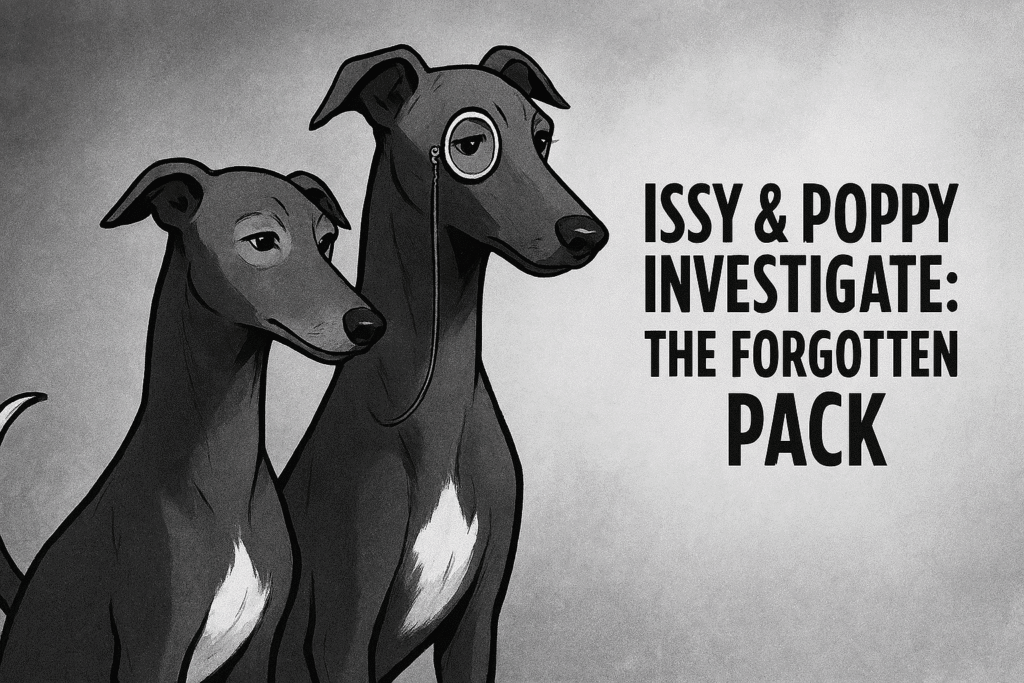
Issy & Poppy Investigate: The Forgotten Pack
Spanish animal welfare law 2023 - galgos and podencos - abandoned hunting dogs Spain
Why this matters now
In 2026, the treatment of Spanish hunting dogs was discussed at an event hosted inside the European Parliament, with CAS International among the speakers. Despite growing concern at EU level, Spain continues to exclude hunting dogs — including greyhounds — from basic legal protection. Updated January 2026.
Dispatch from the Fur Force
Chapter One: Spain’s Animal Welfare Law and Excluded Dogs
It was a quiet morning in Monte Lope Álvarez. Issy levitated above a plate of sobrasada toast. Poppy adjusted her monocle and frowned at the headlines.
🐾 Me: "Spain's new animal welfare law 2023. Pets are now family."
🐕 Poppy: "Unless you're a galgo. Or a podenco. Or anything with a hunting licence and a tragic backstory."
🐾 Me: "They've been excluded. Again. The law says they're 'tools of tradition.'"
🐕 Poppy: "Then tradition needs a biscuit audit."
Joey the budgie fluttered in with a torn flyer from the Ministry of Rural Affairs.
🦜 Joey: "Oi! It says 'sentient beings' in bold. But the fine print says 'except the fast ones.'"
🐾 Me: "I rescued Issy when she was abandoned on my street. One year later, we found Poppy—just skin and bones. She was discarded like a broken tool. But she's family now. And she still wags."
To understand why hunting dogs were treated differently in the 2023 law, it helps to look at their long history in rural Spain. Breeds like galgos and podencos have been used for hunting for centuries, especially in regions where small‑game hunting is woven into local identity and seasonal rhythms.
These dogs have traditionally been viewed as working animals rather than household companions, and their care has often followed practical, utilitarian norms rather than pet‑keeping standards. This cultural framing — combined with the economic importance of hunting in many rural areas — has shaped how lawmakers approach their regulation, and it explains why hunting dogs have repeatedly been handled separately from companion animals in Spanish legislation.
Another part of the historical backdrop is the well‑documented cycle of galgo abandonment that follows the hunting season each year. In many regions, galgos are bred in large numbers with the expectation that only a few will meet the performance standards demanded by hunters. When the season ends, dogs considered too slow, too old, or simply surplus are often discarded, surrendered, or abandoned.
Animal‑welfare groups across Spain have been documenting this pattern for decades, rescuing thousands of galgos every spring. This seasonal influx is now so predictable that rescue shelters prepare for it each year, and it continues to fuel pressure for stronger protections — pressure that stands in sharp contrast to the political decision to exclude these dogs from the 2023 law.
Chapter Two: Bureaucracy and Hunting Lobby Influence
The Fur Force assembled outside the Ministry—a building shaped like a giant chorizo with a revolving door that only opens for lobbyists.
PSOE removed the protections. Unidas Podemos tried to keep them in. The hunting lobby won. And the galgos lost. Again.
Inside, a bureaucrat named Señor Clip stood beside a filing cabinet labelled "Galgos: Seasonal Assets."
Follow the political influence and animal welfare loopholes.
Chapter Three: The Abandoned Galgos and Podencos of Jaén
We followed a trail of discarded collars and broken leashes to a ravine outside Jaén.
These are abandoned hunting dogs in Spain. A lone galgo emerged from the shadows, wearing a medal that read "Fastest in February."
Chapter Four: Tracing Pawprints and Political Loopholes
Back at Casa Adora, we reviewed our findings. Galgos and podencos were excluded by decree. Tradition trumped compassion.
The Fur Force traced the pawprints to PSOE, Pedro Sánchez, and Luis Planas, who shook hands with the Federación Española de Caza. An estimated 50,000 galgos are abandoned or killed every year.
Case File: Galgos and Podencos Exclusion Explained
Law: Ley 7/2023 de protección de los derechos y el bienestar de los animales (March 2023)
Status: Active
Protections Granted: Custody rights, abuse penalties, abandonment sanctions—for cats, dogs, and recognised companion animals
Protections Denied: Galgos, podencos, and other hunting breeds registered under hunting licenses
Reason Given: "Cultural heritage and rural traditions"
Organisations Working on This Issue:
European Galgo & Podenco Advocacy Council - EGPAC
What You Can Do:
Support Spanish rescue organisations directly
Pressure Spanish lawmakers to close the hunting dog loophole
Adopt, don’t shop—especially from ethical rescues
Share their stories. Visibility is protection
Author’s Note: Issy and Poppy’s True Story
Issy and Poppy are real. I found Issy abandoned and starving on my street. One year later, I found Poppy dying in the campo—abused, discarded, left to rot. They are the lucky ones. This dispatch is for the ones still waiting in ravines, and the ones who never made it out.
More from the Issy & Poppy Investigate series here.
Sources:
InSpain.news – PSOE to exclude hunting dogs from this law
This article reports that the PSOE government removed hunting dogs from the draft Animal Welfare Law after pressure from hunting associations and rural voter groups. It explains the political motivation behind the exemption and confirms that the change was made during parliamentary negotiations.
Olive Press – Coverage of the final Animal Welfare Law
The Olive Press confirms that the final version of the 2023 law excludes hunting dogs and other working animals used in rural traditions. While less explicit about the political actor, it supports the factual outcome.
Free the Galgo – Analysis of the legislative process
This source explains that early drafts of the law included hunting dogs, but the final approved version did not. It highlights the shift that occurred during negotiations under the PSOE government.
UK protest coverage – Summary of the 2023 exclusion
Reports on UK‑based demonstrations note that the Spanish Parliament excluded hunting dogs from the new law, reinforcing the broader international awareness of the issue.



This is awful but one day, just like bullfighting it will end. We have to hope so.