The Yale Culinary Tablets don't specify which grain their flatbreads were made from — they didn't need to. In ancient Mesopotamia, around 1700 BC, that grain was emmer wheat. It was the staple, the currency, the foundation of everything. Spelt is the closest modern equivalent: same family, similar nutty flavour, and more widely available than you might think — in Spain, Bio Espelta from Alcampo is the reliable option; Mercadona stocks it occasionally, DIA never. Most UK supermarkets carry it without any trouble. The spelt flatbread recipe that follows is as close to the original as a modern kitchen reasonably gets.
Sesame oil is the other ingredient worth pausing on. It feels instinctively East Asian, but sesame is actually one of the oldest cultivated crops in the Middle East — a primary cooking fat in ancient Mesopotamia, traded extensively across Assyria. The association with China came much later. Here it belongs.
No yeast, no leavening — this predates leavened bread as a domestic staple. The technique is elemental: flour, water, salt, oil, mixed and rested briefly, rolled thin, cooked dry on a hot cast iron pan until charred in places. Unchanged in any meaningful way from 1700 BC.
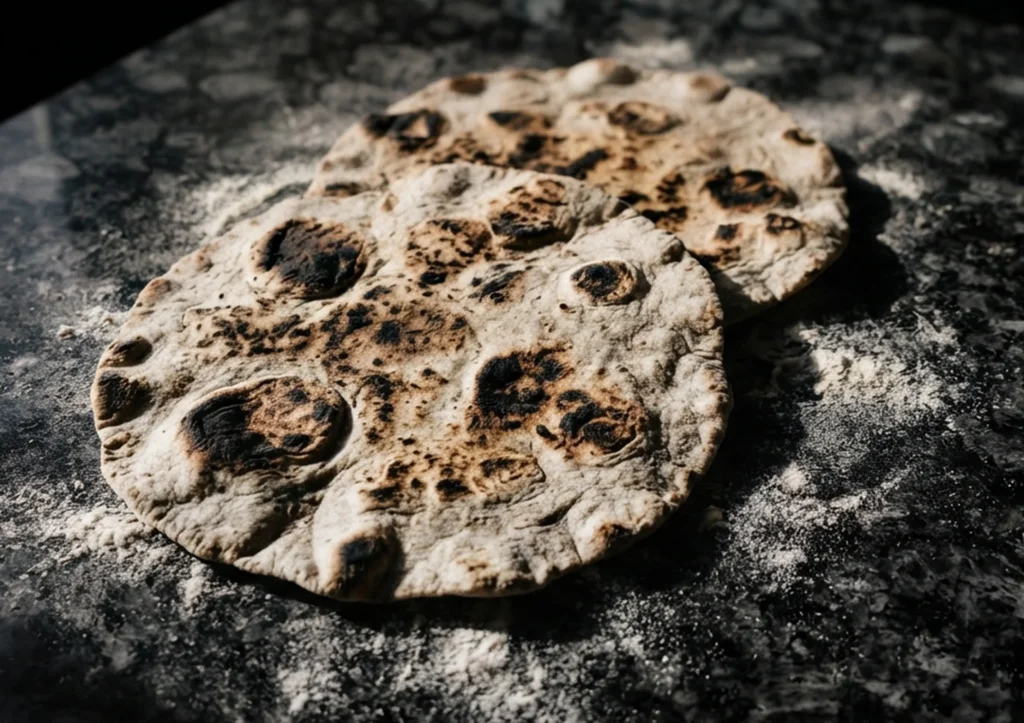
This is the bread that went alongside tuh'u — the ancient Mesopotamian lamb stew from the same Yale tablets. The two belong together, and they're best eaten that way.
Spelt Flatbread Recipe — Ancient Mesopotamian Bread
Ingredients
- 150g spelt flour, plus extra for dusting
- 90ml water
- ¼ tsp salt
- 1 tbsp sesame oil
Method
- Mix the spelt flour, salt, and sesame oil together in a bowl. Add the water gradually, mixing as you go, until a rough dough comes together. It should be soft but not sticky — add a little more flour or water as needed.
- Knead briefly for a minute or two until smooth. Cover and rest for 20–30 minutes.
- Divide the dough into two or three equal pieces. On a lightly floured surface, roll each piece out as thin as you can — 2–3mm, thinner if possible.
- Heat a cast iron pan over high heat until very hot. Cook each flatbread dry — no oil in the pan — for around 2 minutes per side until slightly puffed and charred in places. Keep warm in a folded tea towel while you cook the rest.
- Serve immediately alongside tuh'u, bulgur and chickpeas.
Flatbread is humanity's oldest food — and its most universal. Emmer in Mesopotamia, wheat in Egypt, flour and water for chapattis in India, corn for tortillas in Mesoamerica. Every culture, independently, arrived at the same answer. Flour, water, heat. The details change. The idea never does.
Footnote:
This ancient Mesopotamian flatbread recipe is featured in my Cooking Through History hub, where I cook my way through the ancient world — from Mesopotamian flatbreads to Medieval English pottage. You'll also find it in my Bread Recipes hub and my Gut Health Recipes collection — real food from a rural Andalucían kitchen, built around fermented foods, high-fibre pulses, wholegrains and prebiotic-rich ingredients.
Find more recipes and food adventures here.
Wonky photos, proper food, genuine adventures — The Flexible Chef