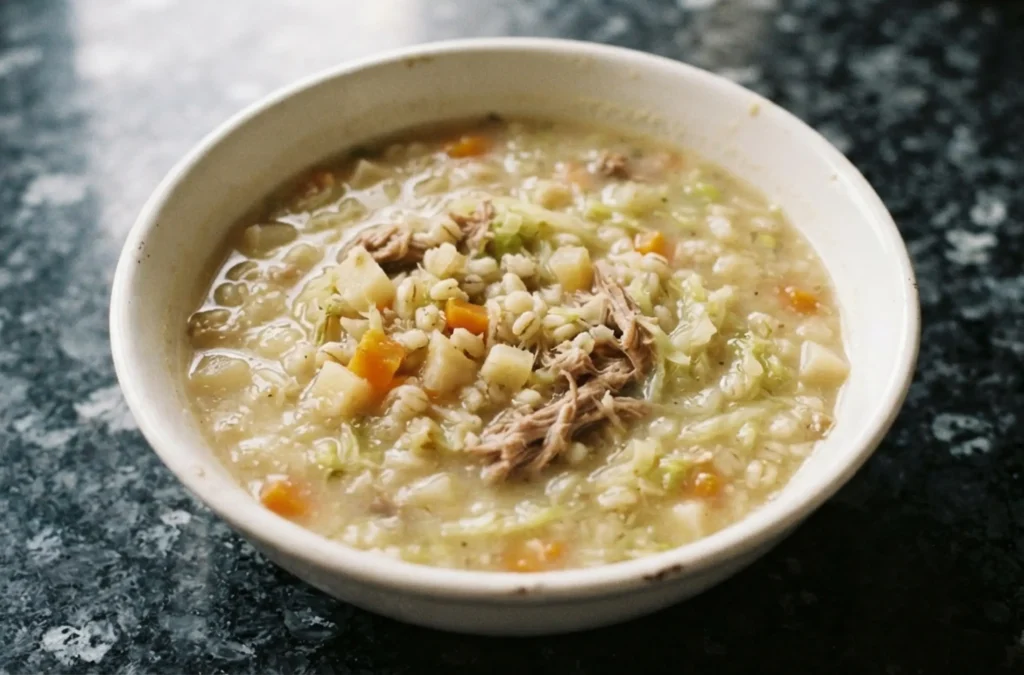
A good scotch broth recipe starts with bone-in lamb — a shank or neck, never boneless. One lamb shank, a handful of pearl barley, yellow split peas, and whatever root vegetables you have to hand will produce something that is genuinely better the next day and takes very little active work to get there.
I make this at Casa Adora with a Spanish lamb shank — smaller than you'd find in a Scottish butcher, but the flavour is excellent. The broth comes out pale and cloudy, the way it should, with the split peas dissolving into the liquid and the barley swelling to fill it out.
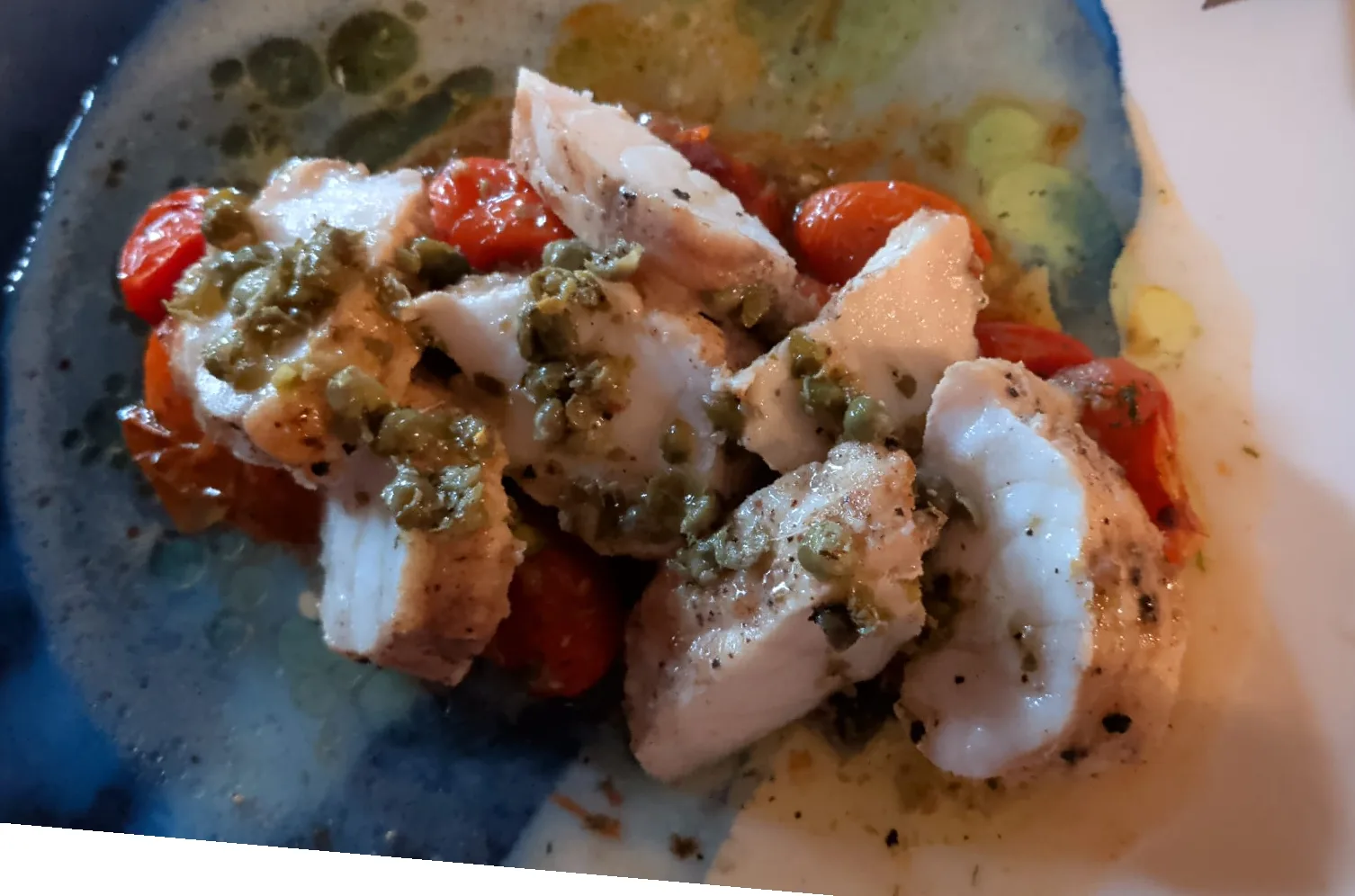
Agnes Isabella didn't make this, as far as I know. But I rather like it.
What You Need for Scotch Broth with Pearl Barley
- 1 lamb shank, bone-in
- 50g pearl barley, rinsed
- 50g yellow split peas, rinsed
- 1 medium onion, finely diced
- 1 medium carrot, diced small
- 1 leek, sliced — white and pale green parts
- 1 stick celery, diced small
- 1 small piece swede (colinabo), diced small
- 2 handfuls cabbage, finely shredded — added late
- 2 bay leaves
- Salt and black pepper
- 1.2 litres cold water
On the swede: In Scotland, what's called a turnip or neep is almost always swede — the yellow-fleshed one, sweeter and more robust than the small white turnip (nabo), and known as rutabaga in North America. For this recipe you want swede (colinabo). In Spain you won't find it easily — use your frozen stash if you have it, or substitute with turnip (nabo), which is the closer match.
How to Make This Lamb Scotch Broth Recipe
Brown the shank
Season the shank well. Heat a little oil in a heavy pot over medium-high heat and brown the shank on all sides — 8 to 10 minutes. Don't rush this; the colour goes into the broth.
Build the broth
Add the onion, carrot, celery, leek and swede to the pot. Pour over the cold water and bring slowly to the boil. Skim the surface thoroughly as it comes up — the pale foam that rises in the first few minutes is what you want to remove to keep the broth clean and light.
Add barley and split peas
Once skimmed, add the rinsed pearl barley, yellow split peas and bay leaves. Reduce to a gentle simmer, partially cover, and cook for 1 hour 30 minutes to 2 hours until the shank meat is falling from the bone and the split peas have dissolved into the broth.
Finish
Lift out the shank and pull the meat from the bone. Discard the bone and any sinew, shred the meat, and return it to the pot. Add the shredded cabbage and simmer for a further 10 minutes. Taste and season with salt and black pepper.
Serve
Ladle into a deep bowl. The broth should be pale, thick and cloudy — the split peas do that. A piece of crusty bread alongside is not optional.
Why Yellow Split Peas Make a Better Scotch Broth Recipe
Red lentils turn a scotch broth muddy orange. Yellow split peas dissolve into the broth more slowly, thickening it gradually and keeping the liquid pale and almost creamy — which is what traditional scotch broth looks like. Green split peas work too but yellow keeps the colour lighter.
The Lamb Shank Question
Scotch broth with pearl barley is traditionally made with bone-in lamb — neck or shanks. The bone is the point: it gives the broth body and a depth that boneless meat simply doesn't produce. In Spain, lamb shanks are smaller than their Scottish equivalents, but the flavour is excellent. One shank is enough for a generous bowl with leftovers, or two meals from the pot.
FOOTNOTE
This scotch broth recipe is part of The Flexible Chef's Scottish Recipes hub — a gathering of traditional and adapted Scottish dishes from a Morrison with roots in Clackmannanshire. You'll also find it in the Soup Recipes hub.
It also features in my Gut Health Recipes collection — real food from a rural Andalucían kitchen, built around fermented foods, high-fibre pulses, wholegrains and prebiotic-rich ingredients.
Find more recipes and food adventures here.
Wonky photos, proper food, genuine adventures — The Flexible Chef