I have eaten rice in India, Thailand, Cambodia, Vietnam, Spain and the United States, and I keep arroz bomba, wild rice, Camargue red and aged basmati in my store cupboard at Casa Adora as permanent fixtures. Rice matters to me. But the best vegetable pilau recipe I have ever eaten was cooked by a Ugandan woman in the back of a chip shop in Norden, Lancashire, sometime around 1983, and I have spent the better part of forty years trying to match it.
The Story of Mrs Uganda
The Bridge Chippy in Norden had been in the same local family for a generation or two when the children decided that frying chips was not their life's vocation and sold it to an Asian family who had been expelled from Uganda by Idi Amin in the early 1970s and had settled in Blackburn before making the move to acquire the chippy. The acquisition was not readily accepted by the majority of locals — until rumours spread about the size of the portions of chips.
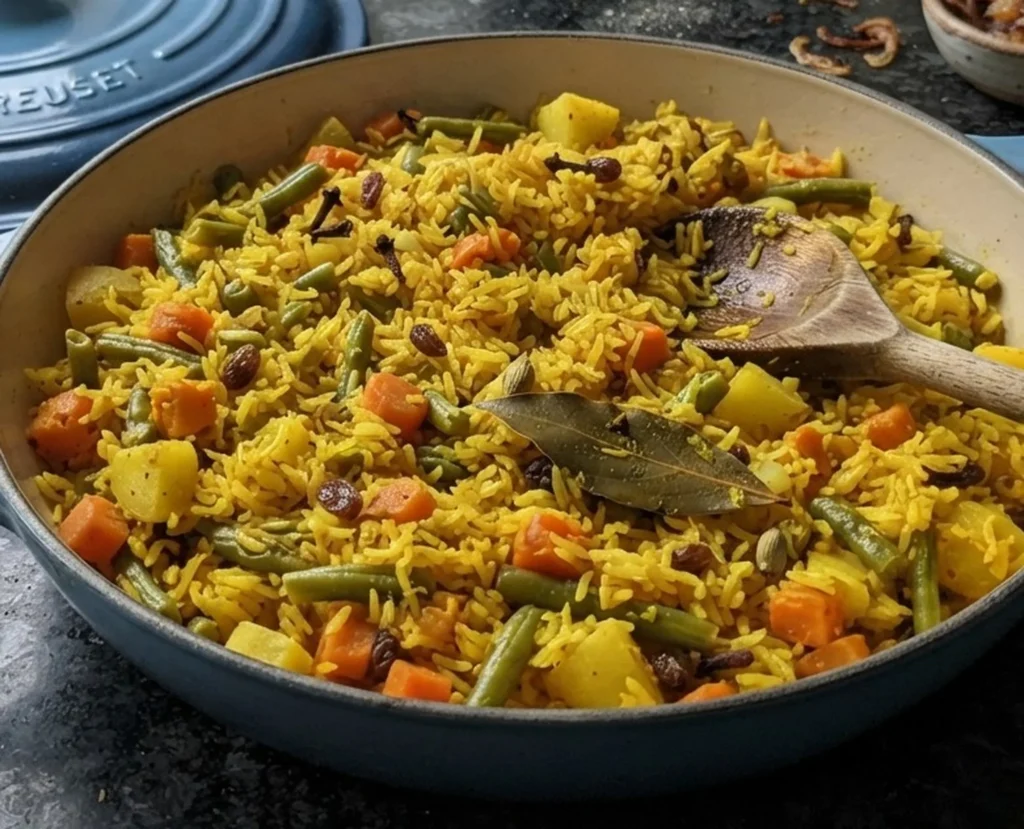
I never knew her name. I called her Mrs Uganda, which says more about the times than it does about me. She was an extraordinary cook. Her pilau was fragrant and golden, the rice long and separate, the vegetables giving it substance and the sultanas giving it an unexpected sweetness that I have never quite forgotten. I have tried many times to repeat it. My efforts, whilst quite good, are nowhere near a match.
This is my version. It is dedicated to Mrs Uganda, wherever she is.
The History of Pilau
Pilau — also known as pilaf, pilav, plov, pulao and a dozen other spellings depending on where you are — is one of the oldest rice dishes in the world. The word comes from the Persian polow, and the dish traces its origins to the ancient Persian royal courts, where rice was cooked in seasoned broth with whole spices. Alexander the Great encountered it during his campaigns in Persia in the fourth century BC and, according to culinary historians, his soldiers carried the method back to Macedonia, from where it spread throughout Greece and eventually across the Mediterranean.
When the Mughal Empire expanded into the Indian subcontinent in the sixteenth century, pilau travelled with it and was transformed by local spices, aromatics and long-grain basmati into the dish most British cooks recognise from Indian restaurants. Most Indian restaurants in the UK — the majority of which are run by Bangladeshi families — serve their own version, which shades into biryani territory. The best pilau I ever tasted was cooked not in India but in Lancashire, which is exactly the kind of thing that happens to food when people move around the world carrying their recipes with them.
Vegetable Pilau Recipe — Mrs Uganda's Version
Serves 1–2
Ingredients
- 80g basmati rice
- 150ml water or light vegetable stock
- Sunflower oil
- 1 small red onion, finely chopped
- 2 garlic cloves, crushed
- 1 small knob fresh ginger, grated
- 1 red or green chilli, seeds removed if preferred, finely chopped
- ½ tsp mustard seeds
- 1 cardamom pod, crushed
- 1 bay leaf or two
- Pinch of turmeric
- ½ tsp garam masala
- 1 small potato, peeled and diced small
- 1 small carrot, peeled and diced
- Small handful green beans, sliced
- Good handful sultanas or raisins
- Sea salt to taste
Method
Step 1 — Soak the rice
Wash the basmati in several changes of cold water until it runs clear. Cover with cold water and leave to soak for 20 to 30 minutes, then drain well.
Step 2 — Start the spices
Heat a generous amount of oil in a wide frying pan with a tight-fitting lid over a medium heat. Add the mustard seeds and cook until they begin to sizzle and pop. Add the onion and cook until softened but not browned, stirring regularly.
Step 3 — Build the base
Add the ginger, garlic and chilli and fry for a minute or two. Add the potato, carrot and green beans and stir to combine. Add the bay leaf, sultanas, turmeric, garam masala and cardamom pod and give the pan a good shake.
Step 4 — Add the rice
Drain the soaked rice and add it to the pan, turning the grains in the oil until they are lightly coated and coloured by the turmeric. Season well with salt.
Step 5 — Cook
Add the water or stock, stir once, and make sure the lid fits tightly — if not, cover the pan with foil before placing the lid on top. Bring to the boil, then reduce to the lowest possible heat and cook for 20 to 25 minutes until the rice has absorbed all the liquid. If the rice is a little wet, remove from the heat and place a clean tea towel over the pan under the lid to absorb the excess steam.
Step 6 — Check and serve
If the rice has caught slightly on the bottom of the pan, do not panic — you have created something close to a socarrat, the caramelised crust that the Spanish prize in a good paella. Fluff the rice gently with a fork and serve straight from the pan. This vegetable pilau recipe scales easily.
This vegetable pilau recipe sits comfortably alongside a curry. For a more elaborate rice dish using the same basmati base, my vegetable biryani takes the dum method and adds another layer of complexity. For the Taj Mahal recreation that started this obsession, see the 1960s vegetable pilau.
Footnote
This vegetable pilau recipe is part of my Rice Recipes collection — a global collection of rice dishes from paella to pilau. Explore the Rice Recipes hub.
Wonky photos, proper food, genuine adventures — The Flexible Chef