Vegetable Pilau Rice Recipe — A Taj Mahal Recreation
There are dishes you order once and never stop thinking about. This authentic 1960s vegetable pilau rice recipe is one of them.
In the late 1960s, my girlfriend and I used to eat at The Taj Mahal in Streatham — sometimes twice a week. We were creatures of habit in the best possible way. Every visit: green mulligatawny soup, vegetable pilau, and a proper mango chutney with identifiable slices of fruit in it — not the smooth, over-sweetened supermarket version, but something that tasted as if someone had actually made it. We were happy. We were regulars. And I, who am perfectly capable of experimenting in a kitchen, ordered exactly the same thing every single time without apology.
Then we moved to Rochdale in 1971. It took the best part of a decade for the curry houses up there to catch up with what London was already doing. Those Taj Mahal meals – the soup, the pilau, and the chutney – became a memory I kept returning to.
This vegetable pilau is my attempt to recreate what arrived at that table in Streatham. Not the modern version, not a restaurant showpiece — the 1960s British-Indian pilau: soft, buttery, gently spiced, with sultanas plumping quietly in the rice and vegetables cooked in rather than added afterwards. Mild and warm and completely its own thing. For a different pilau story — the best I ever ate in Lancashire, cooked by a Ugandan woman in a chip shop in Norden — see Mrs Uganda's Vegetable Pilau.
It has taken a while to get here. I think this is close.
The Vegetable Pilau Rice Recipe I've Been Chasing Since 1968
Ingredients (serves 2–3)
- 200g basmati rice — not aged, not premium. The softer the better
- 350–380ml light stock — vegetable or chicken, not heavily seasoned
- 1 small onion, finely chopped
- 1 small carrot, finely diced
- A handful of frozen peas
- A few green beans, sliced
- 1 tbsp butter or ghee
- 1 bay leaf
- 1 small cinnamon stick
- 2–3 cloves
- 1 green cardamom pod
- ¼ tsp turmeric
- 1 tbsp sultanas
- Salt to taste — keep it gentle
Method
- Rinse the rice under cold water until it runs mostly clear. Don't soak it — 1960s basmati didn't need it, and soaking makes it too fluffy. You want soft, separate grains, not a pilau that falls apart.
- Melt the butter or ghee in a medium saucepan over a low heat. Add the onion and cook gently until soft but not browned. Add the carrot, peas, green beans, bay leaf, cinnamon, cloves and cardamom. Cook for 2–3 minutes until everything smells warm and buttery.
- Add the turmeric — just a pinch, enough for a warm tint rather than a bright yellow — and the sultanas. Stir through.
- Add the rinsed rice and stir for about a minute to coat the grains in the buttery spiced vegetables. This step matters—it's what gives the pilau its old-school texture.
- Pour in the stock, season lightly with salt, and bring to a gentle simmer. Put the lid on, reduce the heat to low, and cook for 12–14 minutes until the liquid has been absorbed.
- Turn off the heat. Leave covered for 10 minutes. Don't lift the lid — this rest is what softens the grains in exactly the right way.
- Remove the whole spices if you prefer, then fluff lightly with a fork. Take care not to break the grains.
What this gives you
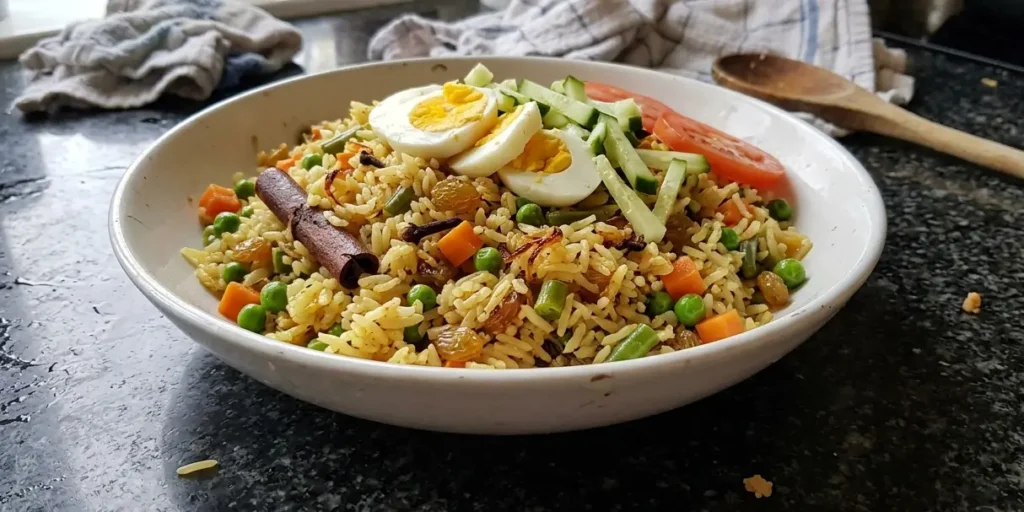
Soft, separate grains with a buttery sheen. Mild, warm aromas from the whole spices. Sweet little pops from the sultanas. Vegetables cooked with the rice rather than added afterwards. Savoury but gentle – the hallmark of 1960s British-Indian pilau.
To serve an authentic 1960s vegetable pilau in the Taj Mahal style, top with a slice of tomato, slices of hard-boiled egg and matchstick-cut cucumber. That's how it arrived at the table next to mine in Streatham, and it's how it should arrive at yours.
Serve it the way it deserves: alongside a green mulligatawny soup and a mango chutney with identifiable slices of fruit in it. That's the meal. That's always been the meal.
This vegetable pilau rice recipe is part of my Curry Recipes — The Flexible Chef's Complete Collection — the complete guide to curries, spice blends, bases, chutneys and sides from The Flexible Chef. Explore the full collection.
It also features in my Rice Recipes collection — a global collection of rice dishes from paella to pilau.
Wonky photos, proper food, genuine adventures – The Flexible Chef