Bzaar — The Libyan Spice Blend Behind Every Great Maghrebi Dish
Every regional cuisine has a spice blend that does the quiet, foundational work — the blend that is not always named on the plate but is always present in the flavour. In Libyan cooking, that blend is bzaar — a bzaar spice blend built on turmeric, caraway and baharat.
Also spelled bzar or bezar, bzaar is a warm, deeply fragrant spice blend that forms the culinary backbone of Libyan cuisine. Every region, town and family keeps their own proportions, but the signature is always the same: heavily turmeric-forward, with caraway providing the earthy, anise-adjacent note underneath. The turmeric gives Libyan dishes their characteristic golden colour. The caraway gives them their depth.
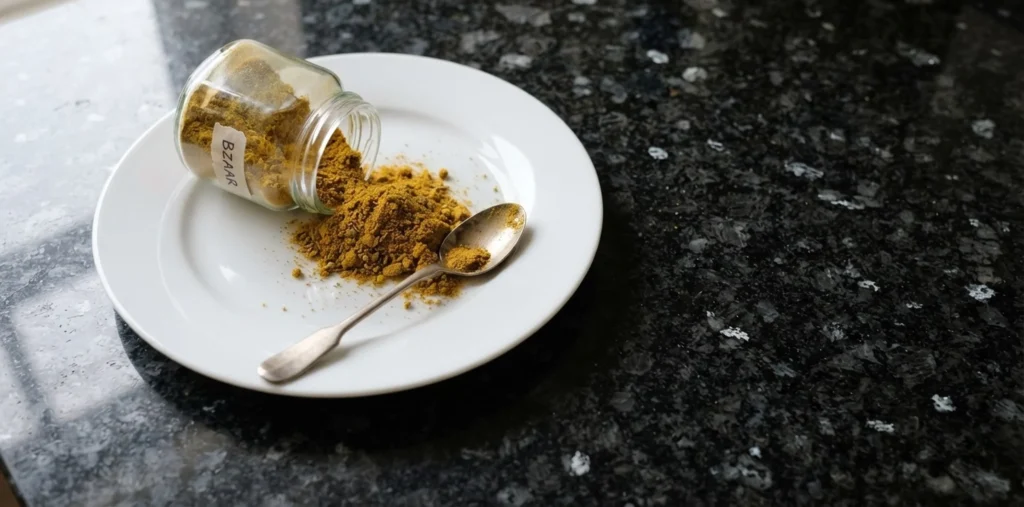
The simplest way to think about bzaar is as baharat — the Arabic seven-spice blend — with extra turmeric and caraway pushed to the front. If you have baharat in the store cupboard, you are most of the way there.
What Is Bzaar Spice Blend — And How Does It Differ from Gulf Bezar
The name can cause confusion because the same word — bezar, bzar, bzaar — appears in Gulf cooking too, particularly in UAE and Omani cuisine. But the two blends are quite different. Libyan bzaar is defined by turmeric and caraway. Gulf bezar focuses on cumin, fennel and dried chilli. Same name, different kitchen, different logic. If you are cooking Libyan food, you want the turmeric-forward version on this page.
Bzaar Spice Blend — The Recipe
Makes enough for several dishes — store in an airtight jar
Ingredients
- 1 heaped tbsp ground turmeric
- 1 tbsp ground caraway
- 2 tsp ground coriander
- 1 tsp homemade baharat
Method
Combine all the ingredients in a small bowl and mix well. Transfer to an airtight jar. Store in a cool, dark place for up to three months.
That is it. No toasting required when using pre-ground spices — the turmeric and caraway are the dominant notes and they need no coaxing.
How to Use Bzaar
The bzaar spice blend is more versatile than its short ingredient list suggests.
In stews and soups: add a teaspoon to the soffritto at the start of cooking — Libyan lamb stews, Sharba Libiya, Mbakbaka pasta. The turmeric will colour the dish golden within minutes.
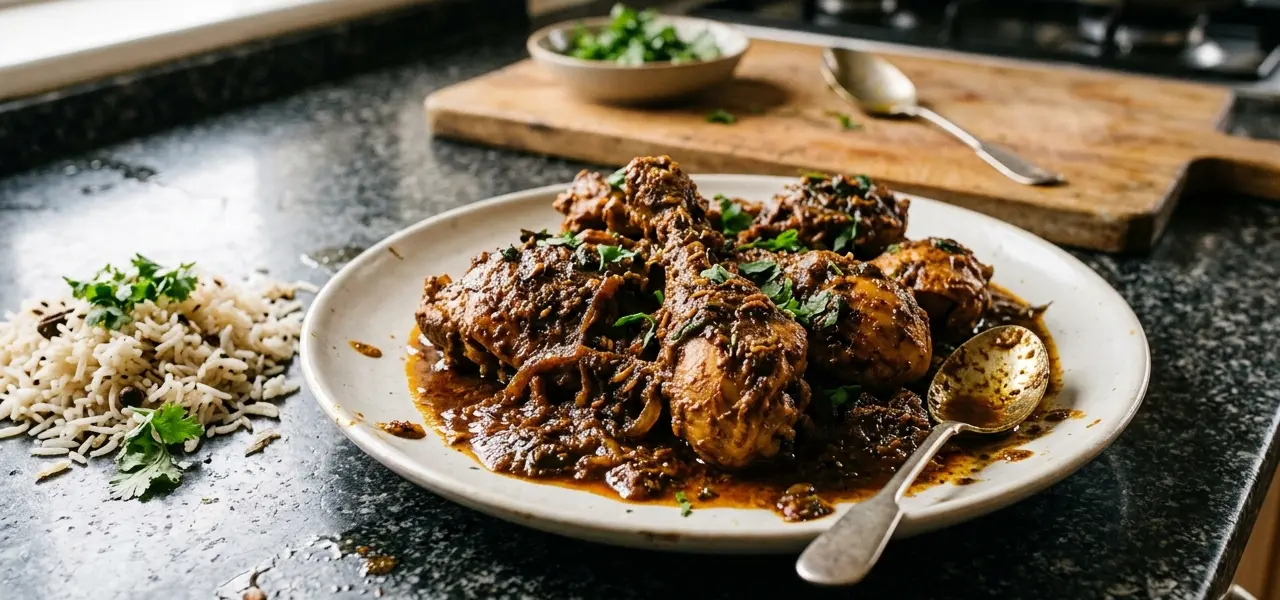
The secret slurry: for grilled or pan-fried meats, mix two teaspoons of bzaar with olive oil, a pinch of chilli flake, and the juice of a grated onion. Coat lamb or chicken pieces and leave for a few hours before cooking. The result is a burnished, deeply aromatic crust that no dry rub alone will produce.
In Mbattan: the stuffed potato dish that is one of Libya's most iconic recipes — bzaar goes into the spiced lamb filling and does the work that makes the dish distinctively Libyan rather than simply Mediterranean.
This bzaar spice blend keeps well for up to three months in a cool dark place — make a batch and use it freely.
A Note on Spelling
Bzaar, bzar, bezar — all refer to the same Libyan blend. The variation reflects the challenge of transliterating Arabic into English rather than any meaningful difference in the recipe. If a Libyan recipe calls for any of these spellings, this is what it means.
FOOTNOTE
This bzaar recipe is part of my North African Recipes collection and my Spice Blends & Condiments collection — a complete guide to homemade spice blends, pastes and condiments from the Casa Adora store cupboard.
Find more recipes and food adventures here.
Wonky photos, proper food, genuine adventures – The Flexible Chef