North African Recipes — From the Moorish Kitchen at Casa Adora
Andalucía is the wrong place to be indifferent to North African food. The Moors arrived here in 711 and stayed for nearly eight centuries — long enough to reshape the landscape, the architecture, the language, and the kitchen. The olive groves that produce the oil I cook with every day were cultivated and expanded under Moorish rule. The saffron in my store cupboard follows a trade route that predates the Reconquista. Thirty-five kilometres from Casa Adora, in Jaén city, Arab baths dating from the eleventh century still stand — some of the best preserved in Spain.
This is not a collection assembled from curiosity. It is a collection assembled from proximity. The North African recipes on this page belong to a food culture that shaped the kitchen I cook in, the ingredients I reach for, and the landscape I look out at every morning.
These are north african recipes from a kitchen that has always been closer to Marrakech than to Madrid.
What You'll Find Here
This North African recipes collection spans six countries. Morocco comes first — the most familiar, the most searched, the richest in TFC's existing recipe archive. Tunisia follows — the deepest section on this page, built around harissa, tabil, and the marqa tradition of slow-braised stews. Algeria, Libya, Egypt and Sudan each bring their own distinct food culture: semolina flatbreads and ribbon noodles from Algeria, okra stews and sorghum dumplings from Sudan, the ancient lentil traditions of Egypt.
The collection ends with The Moorish Kitchen — the section that connects everything, where North African food culture and Andalucían cooking meet in the village kitchen at Casa Adora.
Every recipe here has been cooked. All of them at Casa Adora, using ingredients from Marta's store in the village or the market in Martos — and occasionally from further afield when the store cupboard demands it. None of them are armchair recipes. All of them are real food.
1. MOROCCAN RECIPES
Morocco is where most people begin with North African food — and with good reason. The tagine, the couscous, the preserved lemon, the ras el hanout: these are flavours that have crossed into mainstream cooking in a way that the rest of the Maghreb has not yet matched. TFC's North African recipes — starting with Morocco — draw on that tradition without repeating it — cooked at Casa Adora, adapted for one, and built from a store cupboard that already speaks the language.
Beef Meatballs in Tomato Sauce Tagine
North African Lamb Stew with Couscous
Chicken with Golden Couscous & Crispy Onions
Mackerel Couscous Recipe with Vegetables
Spiced Beef Mince with Couscous
Ras el Hanout: Top of the Shop
Spicy Falafels, Goat's Cheese & Salad Pittas
White Bean, Preserved Lemon and Cumin Purée
One Pot Quail with Preserved Lemon
Onion Tagine — A Slow Oven Braise with Saffron
Harissa Carrots – Inspired by Nigel Slater
2. TUNISIAN RECIPES
Tunisia has the strongest section on this page — not because it is the most familiar, but because it is the most interesting. Tunisian cooking is built on harissa and tabil, on the marqa tradition of slow-braised red stews, and on a spice logic that is distinct from Morocco and entirely its own. I live thirty-five kilometres from Jaén city, where Arab baths still stand. The Tunisian kitchen feels closer here than it does anywhere else in Europe.
Harissa Chicken with Root Vegetables — A Tunisian Marqa
What Is Tabil? A Tunisian Spice Blend Worth Making
Coming soon:
- Tunisian Hlelem — vegetable and bean soup
- Tunisian Jelbana — lamb and pea stew
- Tunisian Lamb Marqa
- Tunisian Chicken Mosli
- Tunisian Kamounia — liver braised with cumin and harissa
- Tunisian Mermez — lamb and chickpeas
- Tunisian Chorba Soup
3. ALGERIAN RECIPES
Algeria sits between Morocco and Tunisia geographically and culinarily — sharing the harissa and preserved lemon tradition of the Maghreb while adding its own distinctive semolina dishes, ribbon noodles, and olive-based braises. Algerian cooking is less well known in the English-speaking world than Moroccan, which means the recipes here are genuinely worth seeking out.
Coming soon:
- Chakhchoukha Biskria — torn semolina flatbread with lamb, chickpeas and a rich red sauce
- Rechta Algérienne — handmade ribbon noodles with chicken and a delicate white onion sauce
- M'touem Constantine — garlicky lamb and chickpea stew
- Tajine Zitoun — chicken or lamb braised with olives, carrots and preserved lemon
- Dolma Sebnekh — stuffed artichokes in a spiced tomato broth
- Kesra Rakhis — soft semolina flatbread
4. LIBYAN RECIPES
Libyan cooking is the least documented of the Maghreb cuisines in English — which makes it, from a food writer's perspective, one of the most interesting. Bazeen, the iconic stiff barley dough served with a rich tomato-lamb sauce, is unlike anything else in North African cooking. Sharba Libiya, the national soup, is fragrant with mint and turmeric. These are dishes that deserve a wider audience.
Bzaar — The Libyan Spice Blend
Sharba Libiya — The Libyan National Soup
Asida bil-Asal — Libyan Honey and Ghee Dough
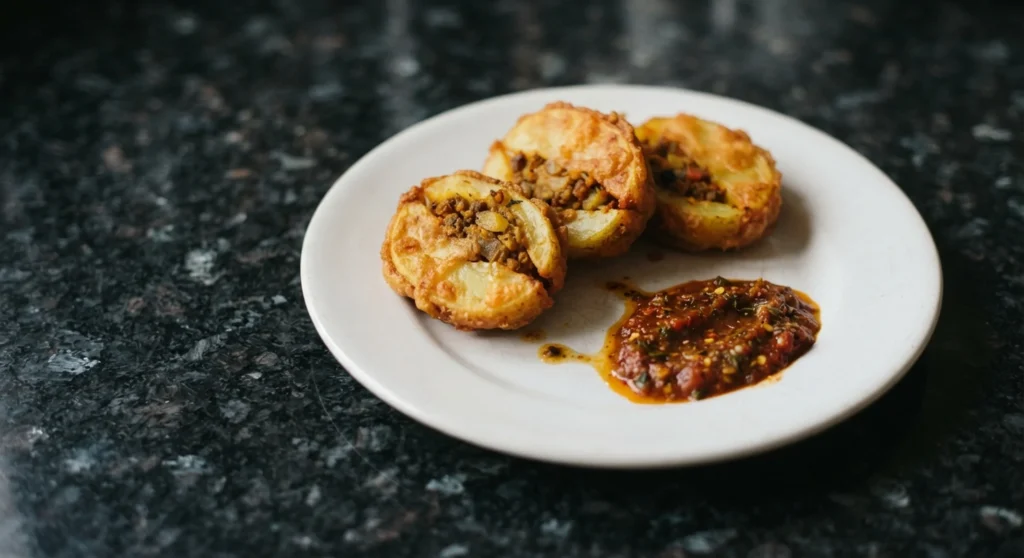
Mbattan — Libyan Stuffed and Fried Potatoes
- Bazeen — stiff barley dough with tomato-lamb sauce and potatoes
- Ruz bil-Khalta — Libyan mixed rice with lamb, chickpeas and spices
- Makroudh Libiya — semolina date-filled pastries
5. EGYPTIAN RECIPES
Egypt is where the ancient and the modern meet on the same plate. The lentil and onion stew that appears in TFC's Cooking Through History collection is one of the oldest surviving recipes in the world — and it is still cooked in Egyptian homes today, more or less unchanged. Dukkah, the spice and nut blend, has its roots here. Ta'mia — the falafel made with fava beans rather than chickpeas — belongs to a tradition shared with Sudan that predates the modern nation state by several thousand years.
Ancient Egyptian Recipes — Lentil and Onion Stew
Dukkah — An Egyptian Spice and Nut Blend
Taameya — Egyptian Falafel with Fava Beans
6. SUDANESE RECIPES
Sudan shares the Nile Valley food tradition with Egypt — fava beans, lentils, slow-cooked stews — but adds its own distinctive ingredients: sorghum, okra, dried lime, and peanut. Kisra, the fermented sorghum flatbread, is the national staple and one of the most interesting fermented breads outside the European sourdough tradition. Aseeda, the sorghum dumpling served with a rich peanut-tomato sauce, is extraordinary.
Mullah Ahmar — Sudanese Red Stew with Okra
Kisra As-Sorghum — Sudanese Fermented Flatbread
Coming soon:
- Tagine Bamia Sudanese — okra stew with lamb, garlic and dried lime
- Ful Medames Sudanese Style — slow-cooked fava beans with sesame oil and green chilli
- Shaiyah — spiced grilled lamb with onions and green peppers
- Aseeda & Mullah Shurbat — sorghum dumpling with peanut-tomato sauce
7. THE MOORISH KITCHEN — ANDALUCÍA MEETS NORTH AFRICA
The word sarraceno — Saracen — appears on the menu of my local panadería in Martos. It is the Spanish name for buckwheat, and it carries an etymology that connects directly to the Saracens, the North African Muslim peoples who reshaped Iberia during the Moorish period. The Moors introduced or spread dozens of crops to Andalucía — saffron, almonds, citrus, rice, aubergine, artichokes. Buckwheat may belong to that list. The evidence is debated; the bread is excellent.
This section is not about recreating North African recipes in an Andalucían kitchen. It is about recognising that the two traditions were never entirely separate — that the kitchen I cook in, the spices I reach for, and the landscape I look out at are all, in some measure, the inheritance of seven centuries of North African culture in this corner of Europe.
Moorish Orange & Honey Roast Chicken — Andalusian Style
Harissa Chicken with Root Vegetables — A Tunisian Marqa
Jaén — Cathedral, Arab Baths & Tapas Bars
Find more North African recipes and food adventures at the Recipe Hubs.
Wonky photos, proper food, genuine adventures — The Flexible Chef