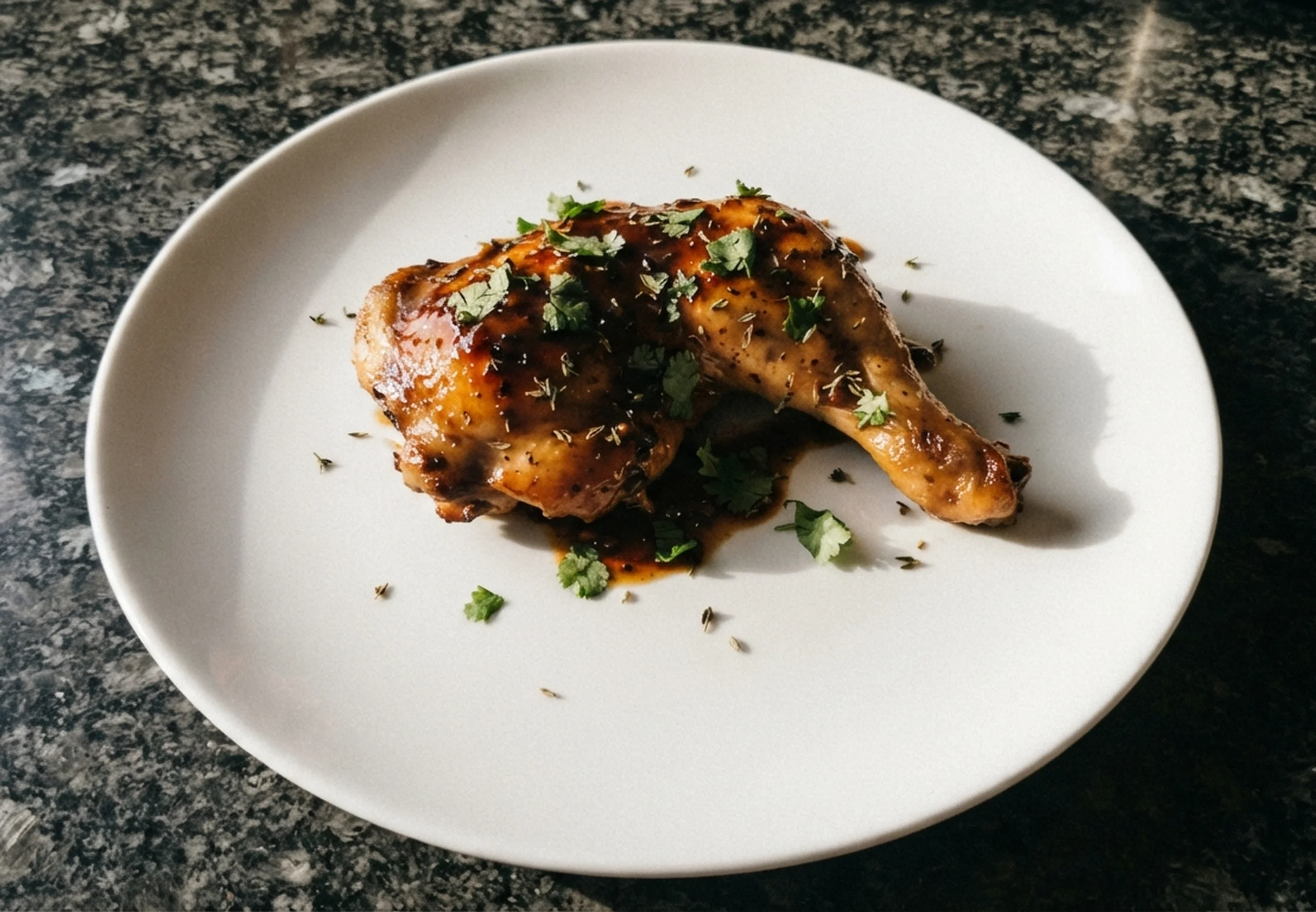
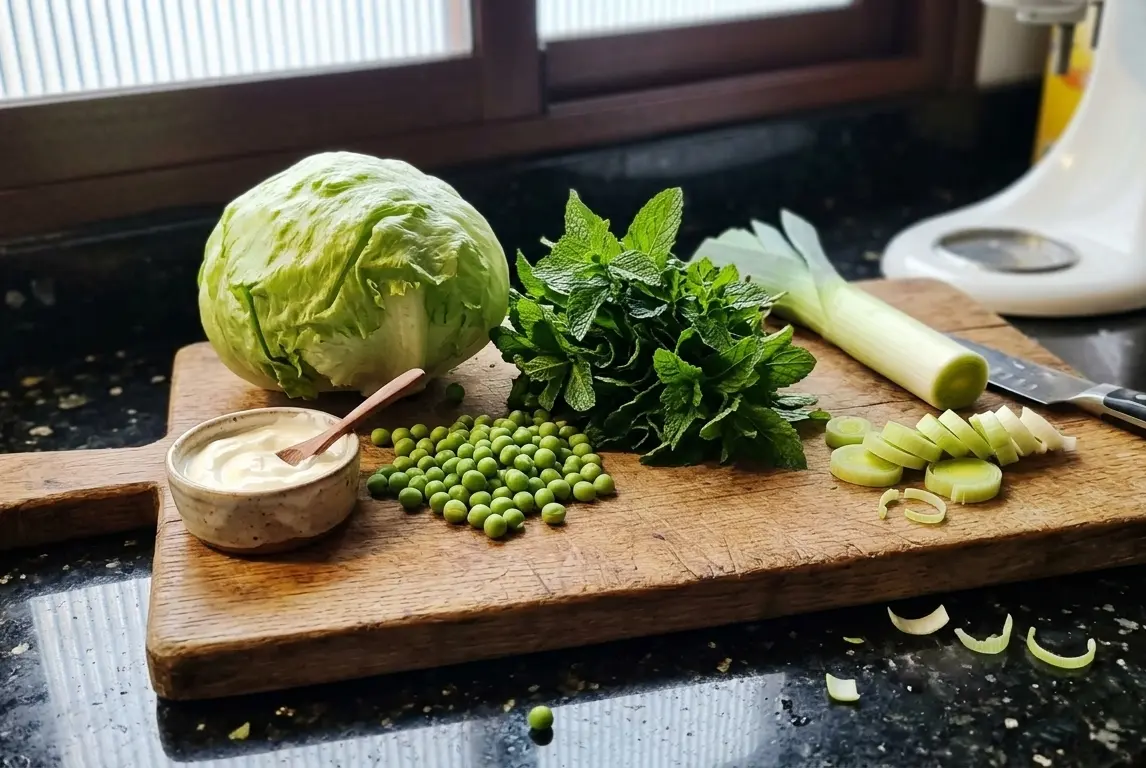
The poem Moretum, attributed to Virgil, describes a Roman farmer waking before dawn, going to his garden, and making this paste before a day's work. It is one of the ancient Roman recipes that needs almost no introduction — garlic, fresh herbs, aged cheese, olive oil, vinegar, pounded together in a mortar until smooth. No cooking required. The Romans would have considered that perfectly acceptable.
Ancient Roman recipes have a reputation for complexity — Apicius, the 1st century AD cookbook, runs to garum reductions, wine sauces, and spices traded from across the empire. Moretum sits at the other end of that spectrum entirely. This is what a farmer ate. Simple, sharp, deeply flavoured, made from whatever was growing outside the door. The contrast with the feast food of Roman banquets is the point.
The flexible angle here is modest. Pecorino in place of caseus — the aged Roman cheese the poem specifies, for which pecorino is the closest modern equivalent. Parsley, coriander, and chives for the herbs — rue is the most authentically Roman choice but it's bitter, hard to find, and an acquired taste that few modern kitchens will thank you for. Red wine vinegar throughout. And extra virgin olive oil — specifically my aceite verde from the Montetucci mill in my village, which turns out to matter more than you might expect. The Romans called this area Tucci. They were pressing oil here two thousand years ago.
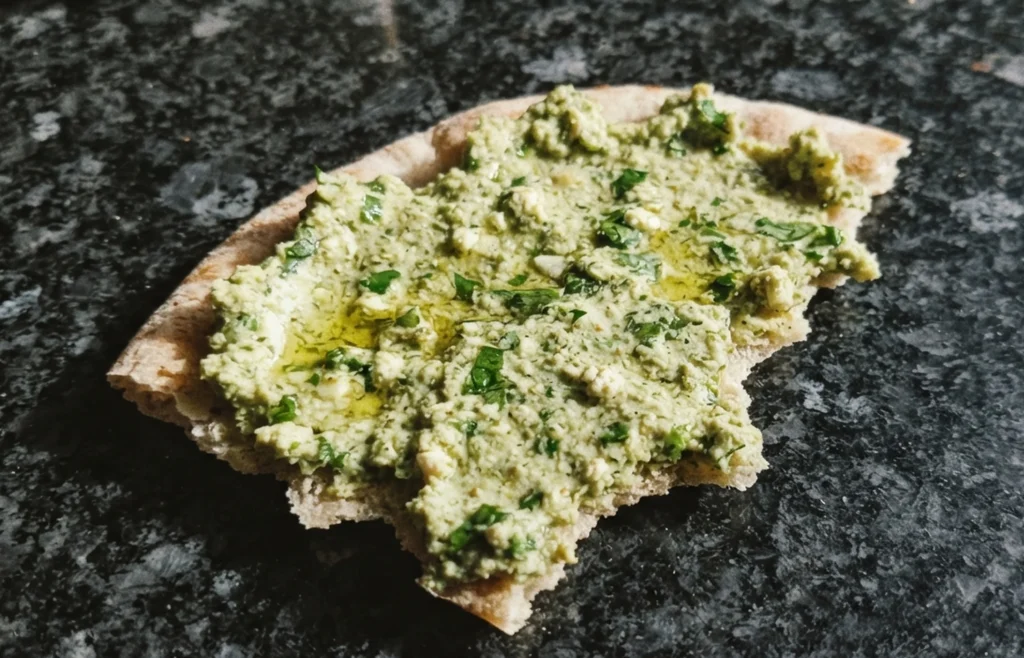
The 'ancient pesto' description of these ancient Roman recipes is not an exaggeration. Pound garlic, herbs, cheese, oil and vinegar together in a mortar and you have something that is recognisably the ancestor of every herb paste that followed it. Pesto, chermoula, salsa verde — the idea is identical. The Romans got there first.
Ancient Roman Recipes — Moretum Herb and Cheese Paste
Ingredients
- 2 garlic cloves, crushed
- Small bunch of fresh parsley, roughly chopped
- Small bunch of fresh coriander, roughly chopped
- Small bunch of chives, roughly chopped
- 50g pecorino, grated
- 2 tbsp extra virgin olive oil
- 1 tsp red wine vinegar
- Sea salt to taste
To serve:
- Spelt flatbread — Romans used wheat flatbread; spelt (far) was actually the original Roman grain before bread wheat took over, so this is arguably more authentic than it looks. Recipe here.
Method
- Put the garlic and a pinch of sea salt into a mortar and pestle and pound until a rough paste forms.
- Add the herbs in batches, pounding between each addition until the mixture begins to come together.
- Add the grated pecorino and pound again until fully incorporated.
- Work in the olive oil gradually, stirring and pounding between each addition.
- Add the red wine vinegar and mix through. Taste and adjust — more salt, more vinegar, more oil as needed. It should be sharp, garlicky, and intensely herby.
- Serve at room temperature, spread thickly on flatbread.
The olive oil in this recipe comes from the Montetucci mill in my village — pressed from olives grown a few kilometres from where I'm writing this. The Romans called this area Tucci. They were pressing oil here two thousand years ago, probably not unlike this one. Some things don't need improving.
Footnote:
This ancient Roman moretum recipe is featured in my Cooking Through History hub, where I cook my way through the ancient world — from Mesopotamian flatbreads to Medieval English pottage.
You'll also find it in my Cheese Recipes hub.
Find more recipes and food adventures here.
Wonky photos, proper food, genuine adventures — The Flexible Chef