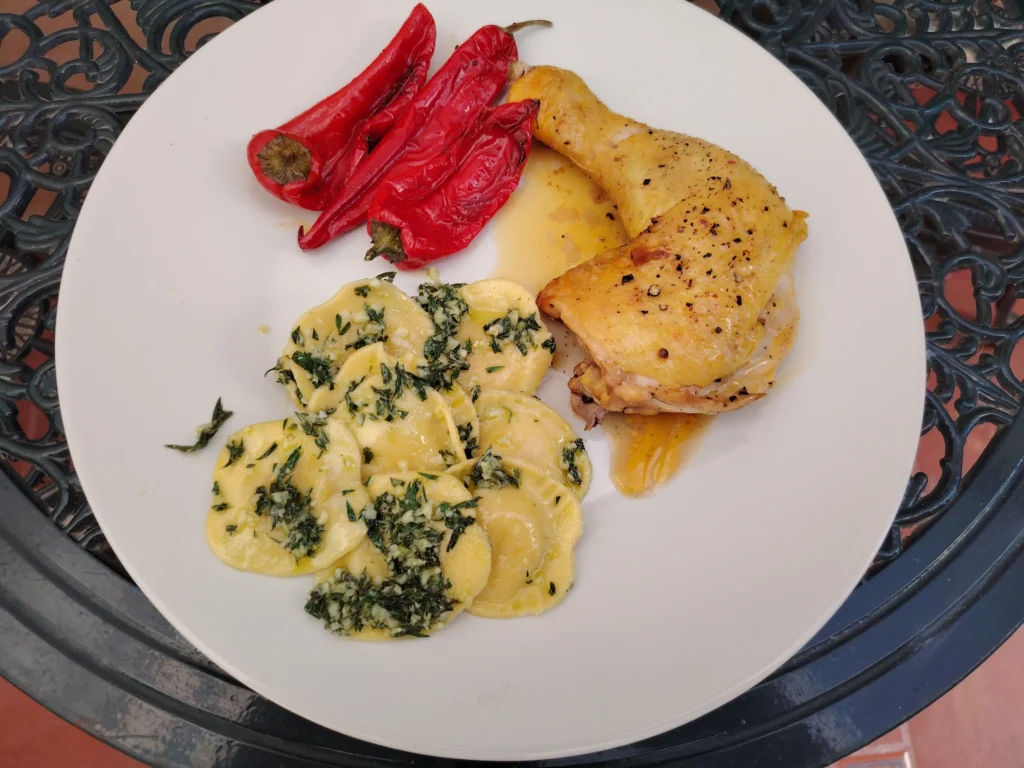
Carrot Top Pesto Pasta with Cold Pan Chicken Leg
There are evenings when the ingredients make the decision for you. A corn-fed free-range chicken leg, a bunch of carrots with their tops still on, Parmesan, pine nuts, pasta, and a blender. That's supper sorted – and nothing wasted. This carrot top pesto pasta with cold pan chicken leg is one of those mid-week meals that looks and tastes like considerably more effort than it actually was.
This is a Casa Adora recipe rather than a van dish, but it has the same logic: one pan, one person, proper food. The cold pan chicken method does the heavy lifting on the protein side, leaving you free to make the pesto while the bird takes care of itself.
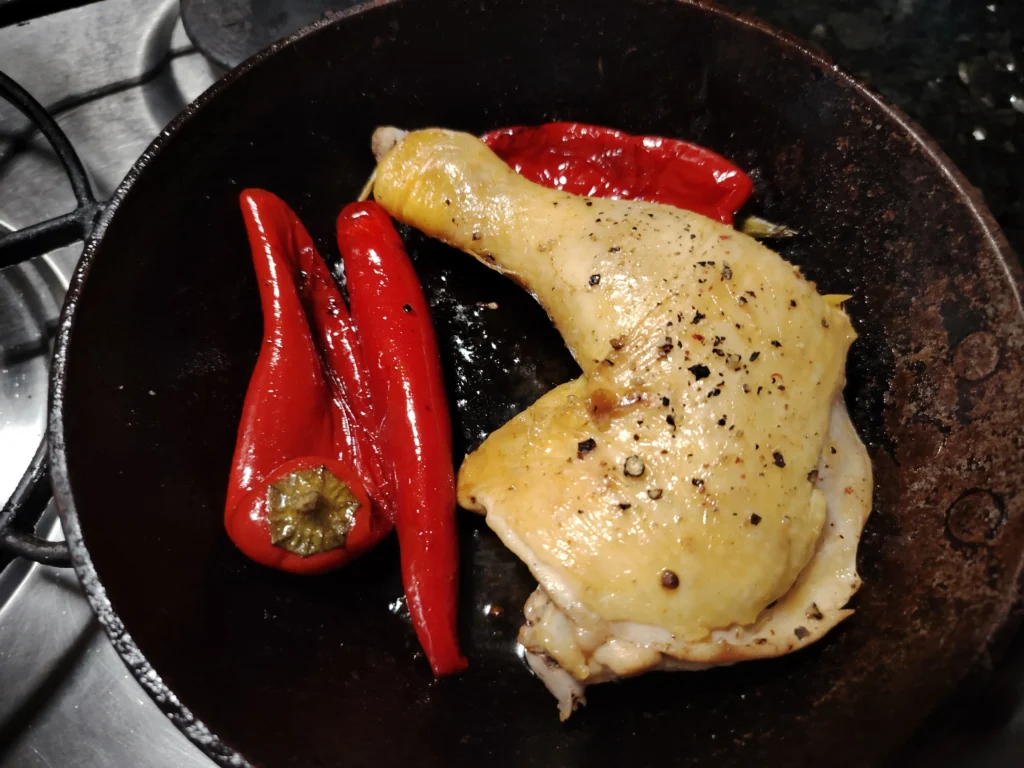
If you haven't come across the cold pan method before, the principle is simple: chicken leg goes into a cold pan skin-side down, heat comes up gradually, and the fat renders slowly into the skin before the heat finishes the job. The result is crackling-crisp skin and juicy meat that hasn't been bullied by a blast of heat. The full method is here: Cold Pan Chicken Leg.
The carrot top pesto is the real story. Carrot tops are one of those ingredients that most people bin without a second thought – feathery, slightly bitter, and perfectly edible. Blended with Parmesan, toasted pine nuts, fresh garlic, lemon, and good olive oil, they make a vivid, herby pesto that's genuinely worth making. Full recipe here: Carrot Top Pesto – A Zero-Waste Recipe Worth Making.
I also threw in two baby red peppers and a red chilli alongside the chicken – because I had them, because they blister beautifully in the rendered fat, and because the colour contrast on the plate is half the point. The chilli adds a gentle heat alongside the sweetness of the peppers. Use whatever you have.
I used leftover goat's cheese ravioli instead of spaghetti – two minutes in hot water, drained, pesto folded through with a splash of the starchy cooking liquid to loosen it. Magnificent. Spaghetti works beautifully too, and the recipe below gives you both options.
Carrot Top Pesto Pasta — What You'll Need
Serves 1
For the chicken:
- 1 corn-fed free-range chicken leg
- A light brush of extra virgin olive oil
- A shake of garlic powder
- A token shake of paprika – picante if you have it, sweet if not, whatever is to hand
- Black pepper
For the carrot top pesto:
- A large bunch of carrot tops, washed
- A smaller bunch of flat-leaf parsley
- 1–2 cloves of fresh garlic, finely chopped
- A good handful of Parmesan, grated – plus extra to finish
- A small handful of pine nuts, toasted – plus a few untoasted to scatter over
- A generous squeeze of fresh lemon juice
- Extra virgin olive oil – enough to bring it together. The best aceite verde you can find, or a cold-pressed rapeseed oil if you have a good source
For the pasta:
- 80–100g goat's cheese ravioli or spaghetti
- A little pasta cooking water reserved before draining
For the pan:
- 2 baby red peppers, left whole
- 1 red chilli, left whole
How to Make It
Prep the chicken. Brush the chicken leg all over with a little olive oil. Season with garlic powder, a token shake of paprika, and black pepper.
Start the chicken. Place the chicken leg skin-side down in a cold, dry frying pan. Add the baby red peppers and chilli alongside. Set over a medium-low heat and leave it alone. The fat will render slowly into the skin and the peppers will begin to blister – this is the method working. Don't rush it.
Toast the pine nuts. In a separate small dry pan, toast a handful of pine nuts over a medium heat for 2–3 minutes, keeping them moving. Set aside a few untoasted ones for the finish.
Make the pesto. Place the carrot tops, parsley, garlic, toasted pine nuts, Parmesan, and lemon juice in a blender. Blitz, drizzling in olive oil as you go, until you have a smooth, vivid pesto. Taste and adjust – more lemon for brightness, more Parmesan for depth. Go easy on the salt – the Parmesan does most of that work.
Cook the pasta. For ravioli: bring a pan of water to a gentle simmer and cook for 2 minutes, then drain. For spaghetti: cook in well-salted boiling water until al dente. Either way, reserve a good cupful of the cooking liquid before draining – the starchy water loosens the pesto and helps it cling beautifully.
Check the chicken. By now the skin should be deep golden and crisp. Flip the leg and cook for a further 5–8 minutes until cooked through. The peppers and chilli should be soft and blistered. Rest for 5 minutes before serving.
Bring it together. Fold the pesto through the drained pasta, adding cooking water a splash at a time until the sauce is silky and coats every piece. Taste and adjust seasoning.
To serve. Spoon the pasta into a bowl, lay the chicken leg alongside with the blistered peppers and chilli, and finish with the reserved untoasted pine nuts, a grating of Parmesan, and a grind of black pepper.
Why This Carrot Top Pesto Pasta Works
The cold pan method gives you chicken skin that's genuinely crisp without drying out the meat – the slow fat render does what a blast of heat never quite manages. The carrot top pesto is earthy and bright in equal measure, with enough Parmesan to give it body and lemon to stop it feeling heavy. The blistered peppers add sweetness, the chilli adds warmth, and together they bring a colour and contrast on the plate that makes the whole dish look considerably more considered than the effort involved. The untoasted pine nuts scattered over the top give you the textural finish.
Which, technically, this entire supper was.
Tips
The carrot top pesto can be made in advance and kept in the fridge for 3–4 days. Spoon it into a sealed jar and pour a thin layer of olive oil over the surface before sealing – this prevents oxidation and keeps the colour bright. Give it a stir before using.
It also freezes well. Spoon into an ice cube tray, freeze, then transfer the cubes to a bag or container. A cube dropped into a pan sauce or stirred through rice is one of those freezer staples that earns its place every time.
Go easy on the salt throughout – the Parmesan carries most of the seasoning load in both the pesto and the finished dish. Taste before you add anything.
Find more recipes in my Chicken Hub and Pasta Hub.
Wonky photos, proper food, genuine adventures – The Flexible Chef