Roman Rabbit Burgers (Isicia Omentata)
Roman Rabbit Burgers (Isicia Omentata)
These Roman rabbit burgers are my version of isicia omentata, a minced meat patty wrapped in fat and fried, from the Roman cookbook attributed to Apicius. Wild rabbit goes through the mincer with a little pork fat, then gets seasoned with fish sauce, pepper, juniper and pine nuts, wrapped in pancetta and cooked in a cast iron skillet. A glaze of reduced Pedro Ximénez finishes it. It is a rabbit burger recipe for one that takes about 40 minutes.
It is hunting season in Andalucía, and my neighbour Rafa gave me two wild rabbits. Boned, they came to 600 g of meat. I minced enough for two burgers and saved the rest for potted rabbit. Rabbit is very lean and mild, which makes it a difficult mince: plain fried, it dries out and tastes of very little. The Romans had a neat answer to that, and it works just as well on a modern hob.
What Is Isicia Omentata?
Isicia omentata is one of the minced meat dishes in Apicius. The recipe is only a few lines long: minced meat with pepper, fish sauce (liquamen) and crushed nuts, with caroenum, a reduction of wine or grape must, wrapped in caul fat (omentum) and cooked lightly. Everything else is up to the cook, and I have made several changes of my own.
My changes, so you know which parts are Roman and which are mine:
- Pancetta instead of caul fat. Caul fat is redaño in Spanish, and a butcher may be able to get it. I used thin slices of pancetta.
- Pedro Ximénez instead of caroenum. Caroenum is boiled-down grape must. Pedro Ximénez, made from sun-dried grapes, is the closest thing I had in the cupboard, and it is an Andalusian wine.
- Juniper instead of myrtle. Myrtle berries turn up in another Roman minced dish. I don't have any, so I used crushed juniper berries, which suit game.
- Wine-soaked sourdough. A little bread soaked in white wine and squeezed dry keeps lean rabbit moist. This is my addition.
- Pork fat. Also my addition, because rabbit has almost no fat of its own.
Roman Rabbit Burgers: Ingredients
Makes 2 burgers. Prep: 25 minutes. Cook: 11 minutes, plus a 5 minute rest.
- 150 g boneless wild rabbit meat, from the legs and forelegs
- 30 g pork belly or pork back fat
- ½ slice white and wholemeal sourdough (about 20 g), crusts off
- 1½ tbsp dry white wine
- 1½ tsp fish sauce
- ¼ tsp freshly ground black pepper
- 1 or 2 juniper berries, crushed
- 1½ tsp pine nuts, crushed
- 4 thin slices pancetta
- 3 tbsp (about 45 ml) Pedro Ximénez sherry
- My ancient spelt flatbread, to serve
How to Make Roman Rabbit Burgers
- Check for shot. Wild rabbit can carry lead shot. Run your fingers over every piece of meat and cut out any shot, along with the bruised meat around it, before it goes near the mincer.
- Trim and chill. Cut away the silvery sinew, which turns tough and wraps around the mincer blade. Chill the rabbit and pork fat in the freezer for 15 to 20 minutes, until firm but not frozen. If you are using a mincer, chill its auger, blade and coarse plate too.
- Soak the bread. Soak the sourdough in the white wine for 5 to 10 minutes, then squeeze it out firmly.
- Mince. Pass the rabbit and pork fat through the coarse plate of a mincer once, alternating a few pieces of meat with a few of fat. Keep everything cold, and stop if the mixture starts to smear.
- Mix. Work the squeezed bread, fish sauce, black pepper, juniper and pine nuts into the mince with your hands until it holds together. There is no added salt, because the fish sauce and pancetta are salty.
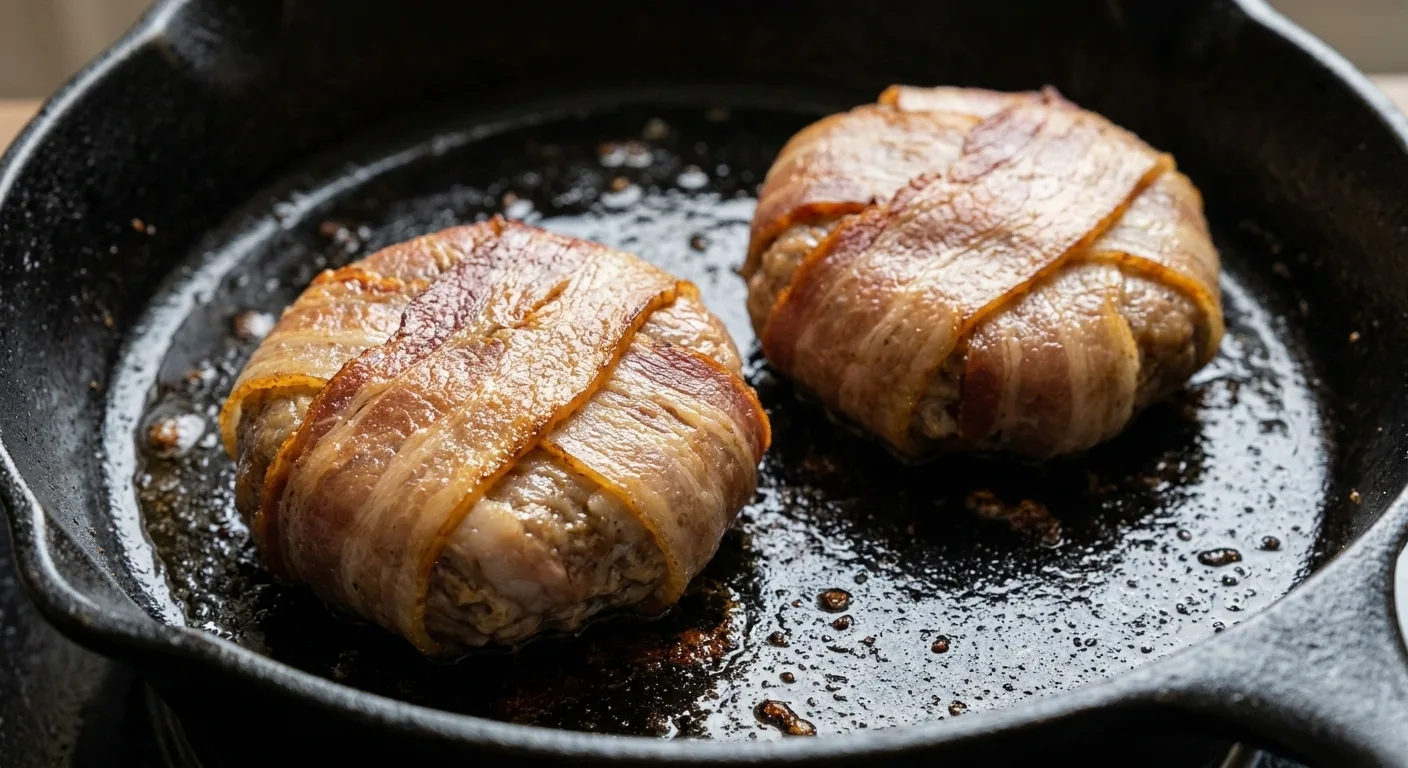
- Shape and wrap. Form two thick burgers. Wrap each one in two overlapping slices of pancetta, tucking the ends underneath.

- Cook. Preheat a cast iron skillet over medium heat. Add no oil, because the pancetta renders plenty of fat. Cook the burgers for 6 minutes without moving them, then turn them and cook for another 5 minutes. If the pancetta colours too quickly, turn the heat down slightly.
- Drain the fat and glaze. Pour the rendered pancetta fat out of the pan. Add the Pedro Ximénez and let it bubble down to a syrup, turning the burgers once in it so they take on a glaze.
- Check and rest. Check with a probe thermometer. I took mine off the heat at 68°C, and after a 5 minute rest they came up to 70°C. Rabbit mince must be cooked all the way through.
Tips for Rabbit Burgers That Stay Moist
- Rabbit is very lean, and these burgers could easily dry out. They tasted good, but next time I would add more pork fat to the mix.
- Treat them like a thick burger: leave them alone in the pan so the pancetta crisps and seals.
- Drain the pancetta fat before the Pedro Ximénez goes in. Otherwise the glaze goes greasy, and the sugar in it burns quickly, so stay at the stove.
- Mincing your own rabbit is better than buying it ready-made, because you control the fat. It is also the only way to be sure the meat is free of shot.
To Serve
I served the burgers in my ancient spelt flatbread, which is about as Roman-adjacent as a burger bun gets. The sweet, sticky glaze and the juniper suit the flatbread well. If you are looking for another way to cook rabbit, try my mustard rabbit with black trumpet mushrooms, or browse all my rabbit recipes. For another Apicius recipe, see my Pullum Frontonianum.
If you’ve enjoyed these rabbit burgers, you can buy me a coffee ☕ — it helps keep the site going.
These Roman rabbit burgers are featured in my Game Recipes and Cooking Through History hubs, and in my mince recipes guide. They also sit with the other dishes in my Rabbit Recipes guide.
Find more recipes and food adventures here.
Wonky photos, proper food, genuine adventures — The Flexible Chef