Membrillo Recipe — Nearly Santa Teresa - Casa Adora
This membrillo recipe starts not in a kitchen but on a camino. Leave the village, pass the farmacia, pass the Montetucci olive mill, and the road opens into the campo. This is Calle Granada — not a street in any urban sense, but the start of the old camino that heads out toward Santiago de Calatrava, through scattered cortijadas and farm clusters, past Las Aceras and Las Peñuelas, through the kind of landscape that hasn't changed much in five hundred years. The name suggests Granada. Locally it goes nowhere near it.
Along that camino, in October, there are quinces. I know because I have been that way before. This October I am going back — I helped myself to a few pomegranates from the same road this year, and the quinces will be ready by the time this post goes up. Wild fruit on an ancient road. It seems a shame not to.
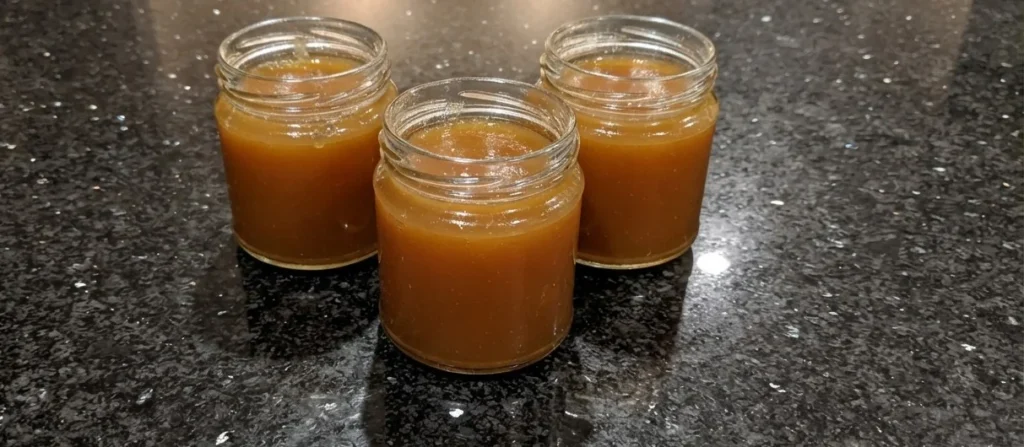
Membrillo is what you do with quinces in Spain. It is quince paste — cooked down with sugar until it sets firm enough to slice, deep ruby-red, slightly grainy, sweet and sharp at the same time. The classic pairing is with manchego: the firm, salty sheep's milk cheese against the dense, jammy paste. It is one of those combinations that is so obvious and so good that you wonder why anyone bothers with anything else on a cheese board.
Santa Teresa Gourmet has been making membrillo in Ávila since the 1980s, building on a family bakery tradition that goes back to 1860. Their version is the benchmark: handmade, organic, no preservatives, widely available across Spain. This is the home version. The quinces come from a camino rather than an orchard. The white sugar is replaced with rosemary honey from Jaén province and a splash of PX, cooked through from the start. The orange zest is not in the Santa Teresa version. The result is softer, darker, more complex — and it fits in a Kadax jar rather than a supermarket slab, which makes it considerably better as a gift.
Hugh Fearnley-Whittingstall's River Cottage membrillo is the British reference point — his version uses white sugar and lemon juice, clean and precise. This one goes in a different direction: the honey brings a faint herbal note, the PX brings warmth, and the orange zest brings the south. Fearnley-Whittingstall would recognise it. The quinces wouldn't recognise him.
Membrillo Recipe — Nearly Santa Teresa
This membrillo recipe produces a soft-set paste rather than the firm, sliceable block you'd buy in a supermarket. The honey and PX mean it sets at a slightly softer consistency — spoonable from the jar rather than sliced from a block. It works beautifully alongside manchego, on a cheese board, or spooned over yoghurt. If you want a firmer set, increase the honey slightly and cook for a few minutes longer.
Nearly Santa Teresa — Membrillo Recipe
Makes 2–3 x 200ml Kadax jars
Ingredients
- 500g quinces, peeled, cored and roughly chopped (prepared weight)
- 300g rosemary honey
- 2 tbsp PX
- Zest of 1 orange
- Juice of ½ lemon
- 100ml water
Method
Cook the quinces. Put the chopped quinces in a heavy-based pan with the water and lemon juice. Cook over a low-medium heat, stirring occasionally, for 20–25 minutes until completely soft and beginning to collapse.
Blend. Remove from the heat and blend until completely smooth with a stick blender. Return to the pan.
Add the honey and PX. Stir in the rosemary honey and PX. Return to a low heat.
Cook down. Cook gently, stirring frequently, for 30–40 minutes until the mixture has thickened considerably, darkened to a deep amber-red, and is pulling away from the sides of the pan. Be patient and keep the heat low — honey catches more easily than sugar.
Add the orange zest. Stir in the orange zest in the last 5 minutes of cooking.
Pot and seal. Spoon into sterilised Kadax jars while still hot. Seal immediately.
Cool and store. Leave to cool completely at room temperature. The membrillo will firm up as it cools. Store in the fridge once opened — keeps for up to 3 months sealed, up to 4 weeks once opened.
Serve alongside manchego, or any firm cheese. A slice of sourdough alongside doesn't hurt.
Chef's Notes
Rosemary honey from Jaén province is the right choice here — its herbal note sits well against the quince and orange. A wildflower honey works too; avoid anything too strongly flavoured like chestnut or buckwheat, which would overpower the quince.
The PX adds warmth and a very faint sweetness that white sugar doesn't bring. Don't be tempted to add more — a splash is enough. This is membrillo, not a dessert sauce.
Quinces are a hard fruit — they need proper cooking time before they'll soften. Don't rush the first stage. They'll turn from white to golden-pink as they cook, which is the natural oxidation of the fruit. The colour deepens further with the honey.
For a firmer, more sliceable membrillo: cook for an additional 10–15 minutes and set in a loaf tin lined with clingfilm rather than in jars. Turn out when cold and slice as needed.
These make good gifts. A Kadax jar of membrillo with a wedge of manchego is one of the better things you can give someone.
This membrillo recipe scales up easily if you have a glut of quinces — keep the ratio of roughly 600g honey per kilo of prepared quince.
If you've enjoyed the recipes, you can buy me a coffee ☕ — it helps keep the site going.
This membrillo recipe is part of my Nearly Series — homemade versions of the condiments worth making yourself. It also features in my Cheese Recipes hub.
Find more recipes and food adventures here.
Wonky photos, proper condiments — The Flexible Chef