Perfect Scrambled Eggs
Scrambled eggs are one of those dishes that most people think they can already make. They're wrong. Overcooked, rubbery, and grey — the default outcome when the heat is too high and the patience too thin. Done properly, scrambled eggs are creamy, softly folded, and worth taking five minutes over. The technique is simple. The discipline is the hard part.
I buy my eggs from the local bakery in the village — high turnover, fresh stock. It makes a difference.
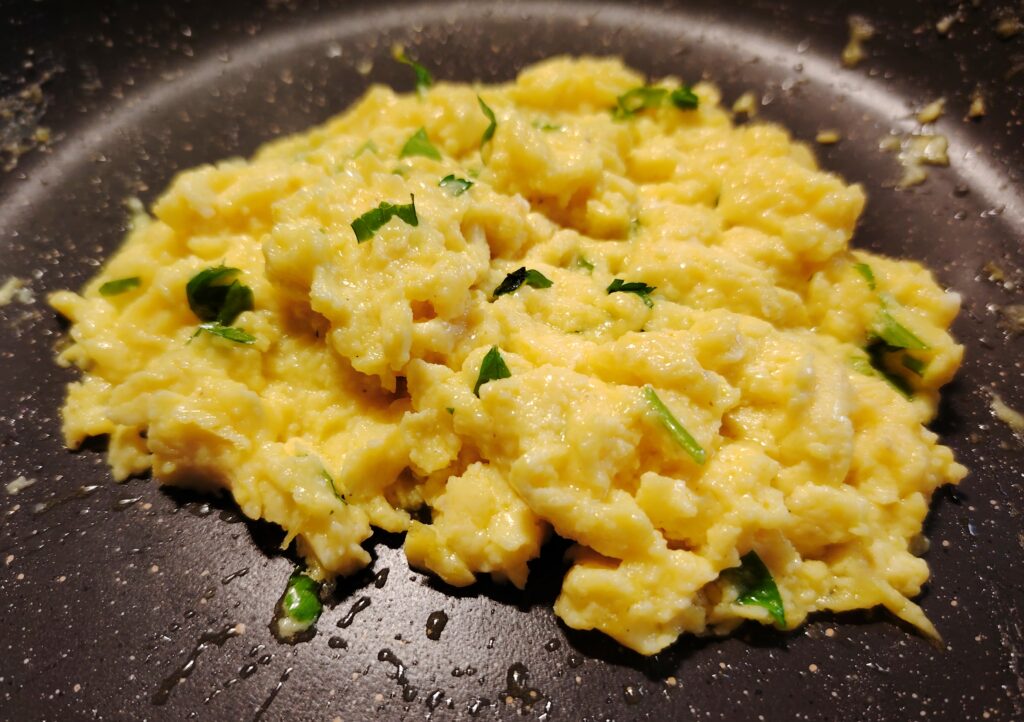
How to Make Perfect Scrambled Eggs
Crack the eggs into a bowl and add a splash of full-fat milk or double cream. Whisk thoroughly until smooth and uniformly combined. Some purists argue against milk — ignore them. It adds creaminess without diluting the flavour.
Heat a non-stick pan over a low heat and add a generous knob of unsalted butter. Let it melt completely before adding the eggs. Pour in the mixture and leave it undisturbed for a moment. As the edges begin to set, use a spatula to gently push the eggs from the edges toward the centre — soft folds, not scrambling. Keep the heat low throughout.
Continue folding gently until the eggs are mostly set but still slightly runny. Take the pan off the heat — residual heat will finish the job. Season with sea salt and freshly ground black pepper just before serving. A scattering of flat-leaf parsley or a little grated cheese if you want something extra.
The Rubberiser
My little sister used to call our microwave the Rubberiser. Our Mum — lovely woman, all good intentions — would cook scrambled eggs in it. They came out grey and bouncy every time. We ate them without complaint. It's one of those memories that still raises a smile.
The microwave method is not recommended here.
Perfect Scrambled Eggs — The Golden Rules
Low heat. Fresh eggs. A non-stick pan. Unsalted butter. Patience. That's it.
Find more recipes and food adventures here.
Wonky photos, proper food, genuine adventures – The Flexible Chef.