Pho Broth Recipe — Hanoi-Style Beef Bone Broth from Marrow Bones and Oxtail
This authentic pho broth recipe is the old-school Hanoi way: marrow bones and oxtail, blanched but never roasted, simmered low and slow with charred onion and ginger and a handful of toasted spices. The result should be a pale, clean broth that shimmers rather than bubbles. I had never tried pho before Hanoi in 2016. I had been told what to expect, and I wasn't disappointed.
I have already cooked two chicken versions, my whole-bird chicken pho and a quick chicken pho for one. This is the Vietnamese pho broth recipe that sits behind the classic bowl, and it is a bigger, slower job.
Pho Broth Recipe — What You Need
A proper Hanoi bone mix usually includes marrow bones for sweetness and body, knuckle bones for gelatine and clarity, brisket trimmings for beef aroma and oxtail for richness. I had marrow bones and oxtail only, so that is what this recipe uses. Without knuckle bones it is slightly less silky, and the oxtail makes up much of the difference. For the general method behind a good beef stock, see my beef bone stock.
Makes just under 4.5 litres of broth.
Bones
- 2kg marrow bones
- 1kg oxtail
Aromatics
- 2 large onions, halved
- 1 large piece of ginger (about 80 to 100g), halved
Spices
- 3 black cardamom pods
- 3 star anise
- 1 cinnamon stick (or cassia bark)
- 4 cloves
- 1 tablespoon coriander seeds
Water and seasoning
- 5 to 6 litres cold water, enough to cover the bones after blanching
- Salt, to taste
- A marble-sized piece of rock sugar (or a big pinch of sugar)
- 1 to 2 teaspoons fish sauce, at the end only
How to Make Hanoi-Style Pho Broth
Soak the bones. Cover the marrow bones and oxtail with cold water and leave them for 1 to 2 hours, changing the water once it turns pink. This draws out the blood and is the first step towards a clear broth.
Blanch the bones. Cover with fresh cold water, bring to a hard boil for 5 to 10 minutes until grey scum rises, then drain. Rinse every piece under running water, scrub off any clinging scum and wash the pot properly. Do not skip this. Blanching is what keeps an unroasted broth pale and clean.
Char the aromatics. Hold the halved onions and ginger over a gas flame, under the grill or in a dry pan until blistered with black patches. Rinse off any loose burnt skin.
Toast the spices. Toast the cardamom, star anise, cinnamon, cloves and coriander seeds in a dry pan for a minute or two until fragrant. Tie them in a muslin bag if you have one.
Build the broth. Put the blanched bones, charred onion and ginger and the spices into the clean pot and cover with 5 to 6 litres of cold water. Bring it up slowly to a gentle simmer. Never boil it. Pho broth should shimmer, not bubble, because a hard boil clouds it and makes it harsh.
Skim and simmer. Leave the lid off and skim for the first 30 minutes. Then set the lid ajar and keep the surface just trembling. Top up with hot water if the bones rise above the surface.
Take the spices out at about 1 hour 30 minutes, before the cardamom and cloves turn bitter. Lift the oxtail out at about 3 to 3.5 hours, when the meat gives easily, and set it aside covered. Leave the bones in until about 6 hours in total.
Season, then strain. Strain through a fine sieve and discard the bones, aromatics and spices. Then season: salt to taste, the rock sugar and just 1 to 2 teaspoons of fish sauce. Hanoi broth is subtle, not Saigon-sweet or heavy with fish sauce, so taste as you go.
It was clean and light and good, but it didn't quite taste like the broth I remember from Hanoi. I suspect the missing brisket trimmings and knuckle bones, which add the beefy depth and body that marrow bones and oxtail alone don't quite give. Next time I'll add both.
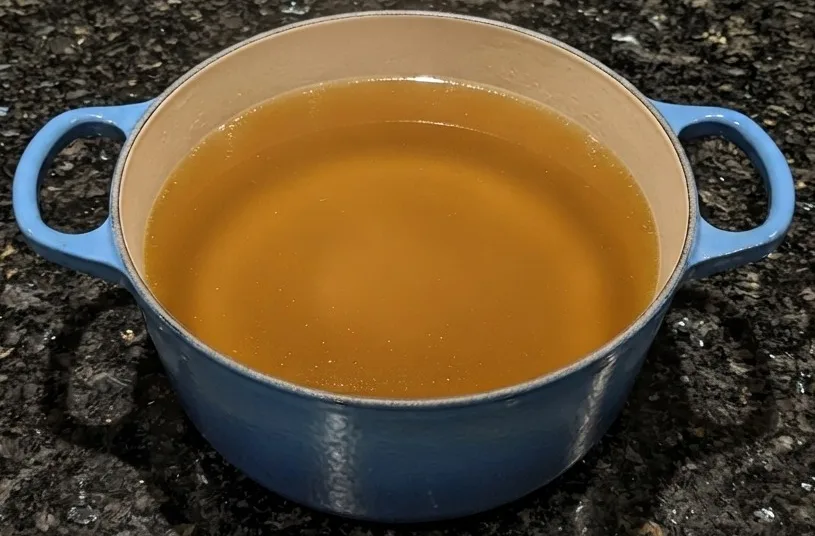
The broth came out golden-amber and reasonably clear, though not crystal clear. My simmer ran a bit livelier at the start until I found a happy medium. My gas hob is 14 years old and I usually need a heat diffuser to hold a gentle simmer. Marrow bones also release a lot of fat, so keep the surface barely moving and skim well.
Cool quickly if you are storing it, and skim the fat off the top if you want a very light broth.
What to Do with the Oxtail
Shred the tender oxtail meat while it is still warm, discarding any gristle and hard fat. Keep it in a little of the finished broth so it stays moist. It keeps for about 3 days in the fridge and freezes well.
How to Serve It
A classic Hanoi bowl is simple: noodles, shredded oxtail, sliced spring onion, thin slices of raw onion, coriander and a squeeze of lime, with chilli in vinegar on the side. Leave out the hoisin and sriracha.
I served mine as an oxtail and three bean pho. I rinsed tinned black beans, jarred cannellini beans and chickpeas well, so their liquid wouldn't cloud the broth, warmed them in a small pan with a ladle of broth, added the shredded oxtail for the last minute and tipped it all over soba noodles. Soba isn't traditional, but it's what I had in the cupboard.
This pho broth recipe makes far more than one bowl, so freeze the rest in portions. It is the base for any pho, and the chicken versions are a lighter alternative.
My whole-bird chicken version is here: Chicken Pho Recipe — Jacques Pépin's Method, My Hanoi Memories.
And for one person with a leftover roast leg: Easy Chicken Pho for One.
And for a meat-free bowl, using homemade vegetable stock instead of bones: Vegan Pho for One with Black Trumpet Mushrooms.
If you want a darker, roasted beef stock rather than a clear Hanoi one, see my Beef Bone Broth.
If you've enjoyed the recipes, you can buy me a coffee ☕ — it helps keep the site going.
This pho broth recipe is featured in my Soup Recipes Hub, a collection of hearty, chilled and Asian-inspired soups from Casa Adora and the road.
It also features in my Stock & Gravy Hub and my Beef & Veal Recipes collection.
Browse all recipe collections in The Flexible Chef's Complete Hub Guide.
Find more recipes and food adventures here.
Wonky photos, proper food, genuine adventures — The Flexible Chef