Harissa Chicken with Root Vegetables — A Tunisian Marqa
I was looking for a gut-healthy way to cook a chicken breast. Not a salad, not a poached supreme — something with depth, with vegetables, with a sauce worth eating. I went to the spice cupboard. Harissa. Tabil. Tomato paste. Homemade stock.
What came out of the oven an hour later was a Tunisian marqa — a slow-braised stew that belongs to the same North African culinary tradition that shaped Andalucía for seven centuries. I live thirty-five kilometres from Jaén city, where Arab baths dating from the eleventh century still stand — some of the best preserved in Spain. The connection between my kitchen and the Maghreb is not a stretch. It's geography and history on a plate.
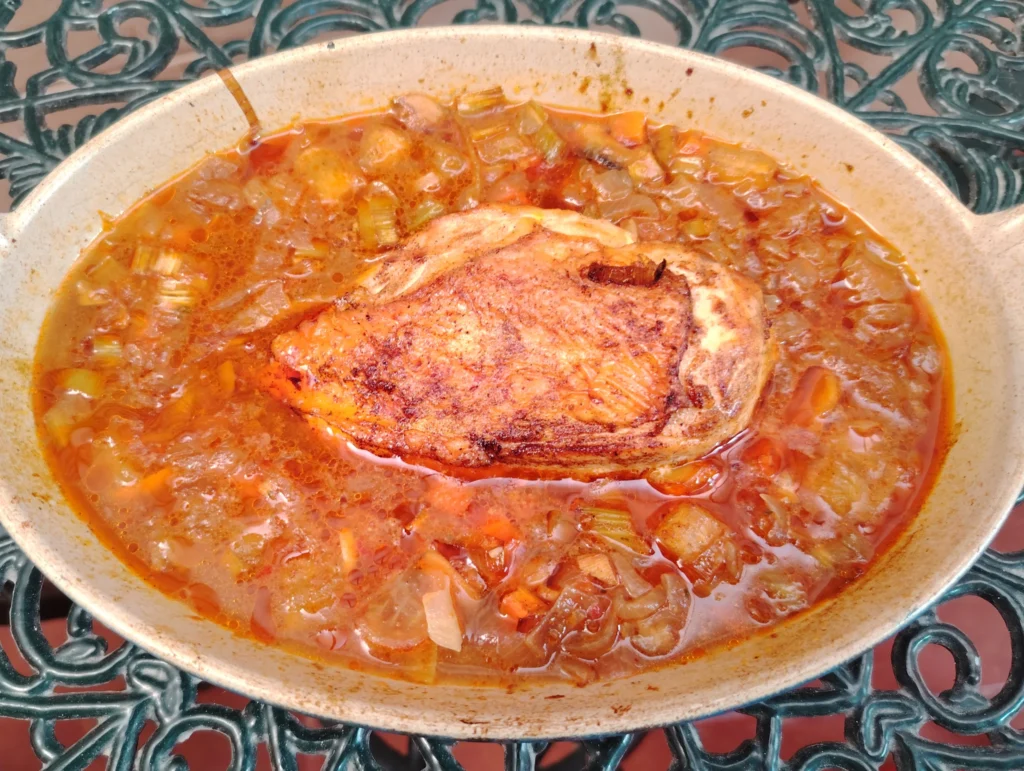
This is a harissa chicken recipe built around a corn-fed breast, root vegetables, mushrooms, and the distinctly Tunisian spice logic of harissa and tabil. Cooked in a 20cm Le Creuset, on the hob and in the oven, for one.
What Is a Tunisian Marqa?
Marqa is Tunisia's foundational braised stew — built on tomato paste, olive oil, and harissa, slow-simmered until the sauce thickens and the meat is tender. It belongs to a family of red stews that are the backbone of Tunisian home cooking, distinct from the Moroccan tagine both in technique and in flavour. Where Moroccan cooking reaches for ras el hanout and preserved lemon, Tunisian cooking reaches for harissa and tabil — a coriander-caraway blend that is one of the most distinctive spice combinations in North African cuisine.
This harissa chicken recipe sits firmly in the marqa tradition.
A Tunisian tagine, confusingly, is something else entirely — a baked egg dish, closer to a frittata. What you're making here is a marqa: a braise, a stew, a one-pot built for a heavy pan and a low oven.
Why This Is Also a Gut-Healthy Chicken Recipe
Root vegetables, mushrooms, homemade stock, olive oil, and a fermented harissa paste — this harissa chicken recipe ticks most of the boxes in my Gut Health Recipes collection without being engineered for health. The turnip and carrot provide prebiotic fibre. The mushrooms contribute beta-glucans. The homemade stock brings collagen and depth. The harissa — made from fermented chillies — adds live culture benefits if you're using a raw paste rather than a cooked one.
It's the kind of dish that is good for you because it's made from real ingredients, cooked properly, and eaten with attention. That's all gut health ever really is.
Harissa Chicken with Root Vegetables — The Recipe
Serves 1
Ingredients
- 1 corn-fed chicken breast, skin on (approx. 225g)
- 2 tbsp olive oil
- 1 small onion, finely diced
- ½ leek, sliced
- 1 celery stalk, sliced
- 1 medium carrot, cut into chunky pieces
- ½ small turnip, peeled and cut into chunky pieces
- 5–6 mushrooms, halved
- 2 garlic cloves, crushed and chopped
- 1 tbsp tomato paste
- 1 tbsp harissa
- 1 tsp tabil
- Homemade chicken stock — enough to come halfway up the chicken
- Small handful fresh coriander, roughly chopped
- Small handful fresh flat-leaf parsley, roughly chopped
- Squeeze of fresh lemon juice
- Salt and black pepper
Method
Preheat the oven to 170°C.
Season the chicken breast well on both sides. Heat the olive oil in a 20cm Le Creuset over a medium-high heat. Place the chicken skin-side down and sear without moving it for four to five minutes until the skin is golden and crisp. Flip briefly to colour the other side, then set aside.
Reduce the heat to medium. In the same pan, soften the onion, leek, celery and garlic for four to five minutes until beginning to soften. Add the tomato paste and harissa and cook for two minutes, stirring, until the paste darkens slightly and loses its raw edge. Add the tabil and stir through.
Add the carrot, turnip and mushrooms and stir to coat in the base. Pour in enough chicken stock to come halfway up the chicken. Nestle the chicken breast back in, skin-side up — the skin should sit above the liquid so it crisps in the oven rather than steaming.
Cover with the lid and transfer to the oven. Braise for 25–30 minutes, then remove the lid and cook for a further 10 minutes to colour the skin and reduce the sauce slightly.
Remove from the oven. Check the vegetables are tender and the chicken is cooked through. Squeeze over a little lemon juice and scatter with fresh coriander and parsley. Serve straight from the Le Creuset with couscous, crusty bread, or rice.

Notes
Tabil is Tunisia's signature spice blend — coriander and caraway at its core, sometimes with garlic and chilli. If you don't have it made, use ½ tsp ground coriander and ½ tsp ground caraway as a substitute. The full recipe and story is at What Is Tabil?
Harissa heat varies enormously between brands and homemade batches. Taste before adding and adjust — 1 tbsp is a starting point, not a rule.
The turnip is authentically Tunisian and worth seeking out. It absorbs the harissa and tabil beautifully and becomes something quite different from its raw self after 30-35 minutes in a hot oven.
This harissa chicken recipe will keep in the fridge for two days — the flavours deepen overnight.
FOOTNOTE
This harissa chicken recipe is part of my Chicken Recipes collection — a complete guide to cooking every cut, every style, from Casa Adora and the road.
You'll also find it in my Gut Health Recipes collection — real food from a rural Andalucían kitchen, built around fermented foods, high-fibre pulses, wholegrains and prebiotic-rich ingredients.
This recipe is also part of my North African Recipes — From the Moorish Kitchen at Casa Adora.
Find more recipes and food adventures here.
Wonky photos, proper food, genuine adventures – The Flexible Chef