Homemade Za'atar – My Andaluz Version of a Middle Eastern Classic
My fascination with Middle Eastern food has been a long and rewarding thread running through my cooking life — from a borrowed Syrian cookbook and a rooftop mezze in Andalucía to Iranian saffron handed to me by a stranger at a logistics show in Birmingham. This homemade za'atar is part of the same story — a Middle Eastern herb blend that has earned a permanent place on my spice shelf.
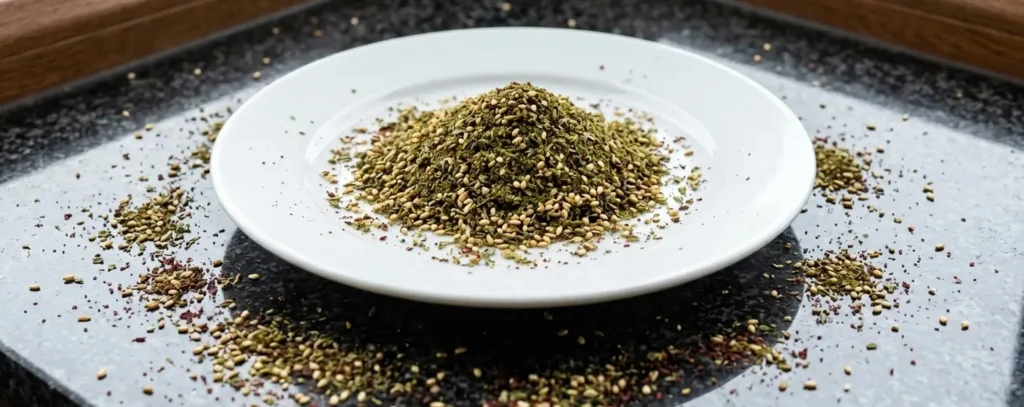
Homemade Za'atar Middle Eastern Herb Blend — The Flexible Chef
Za'atar (زَعْتَر) is found across the entire Arab world — and almost every country in that world has its own version. Armenia, Egypt, Iraq, Jordan, Lebanon, Libya, Morocco, Palestine, Saudi Arabia, Syria, Tunisia, Turkey — each has its own variation, its own proportions, its own particular character. What they share is a core of dried thyme or oregano, sumac for its sharp lemony tang, and sesame seeds for nuttiness. Beyond that, the blend is yours to shape.
This is my Andaluz version — made with what grows well here and what sits happily on my spice shelf. It takes five minutes to make and keeps for several months in an airtight jar.
What makes homemade za'atar genuinely useful is the combination it delivers in a single spoonful: herbiness from the thyme and oregano, acidity from the sumac, and nutty crunch from the sesame. It behaves like salt, acid, and aroma all at once. That is why it works on almost everything — bread, vegetables, meat, eggs, dips, salads, grains. I use it across all of them at Casa Adora.
How to Make Homemade Za'atar
Makes one jar. Keeps for several months in a cool, dark place.
Ingredients
- 3 tbsp sumac*
- 2 tbsp dried thyme
- 2 tbsp dried marjoram
- 2 tbsp dried oregano
- 1 tbsp roasted sesame seeds, ground
- 1 tsp sea salt flakes
*Sumac is a Middle Eastern spice made from dried berries of the sumac bush — sharp, lemony, and irreplaceable here. If you cannot source it, use lemon pepper seasoning, or dry your own: finely grate lemon zest, spread on a sheet, and leave at room temperature for 24–48 hours, then grind to a powder in a pestle and mortar.
Method
- Grind the sesame seeds — Toast the sesame seeds in a dry pan for 1–2 minutes until golden. Leave to cool, then grind in a pestle and mortar.
- Combine — Mix the ground sesame seeds with all remaining ingredients until evenly blended.
- Store — Transfer to an airtight jar and keep in a cool, dark place.
The Flexible Chef Tip: Za'atar is at its best mixed with good olive oil – a simple dipping sauce for flatbread that takes thirty seconds to make and is considerably better than anything that comes in a jar. Start there and work outward.
What to Use Za'atar On
- Bread and flatbreads — mixed with olive oil and spread on man'oushe, brushed onto pitta or naan before grilling, or sprinkled on focaccia before baking
- Roasted vegetables — potatoes, sweet potatoes, cauliflower, courgettes, aubergines — za'atar loves heat
- Chicken and lamb — as a rub with olive oil and lemon, or as a finishing sprinkle
- Eggs — scrambled, fried, in a shakshuka
- Dips and spreads — stirred into labneh, Greek yoghurt, or hummus
- Salads — tomato and cucumber, fattoush, green salads with lemon and olive oil
- Finishing sprinkle — soups, roasted meats, grains, avocado toast
This recipe is part of my Spice Blends & Condiments collection.
Wonky photos, proper food, genuine adventures – The Flexible Chef