Nearly Tra Chang — Homemade Shrimp Paste, Sun-Dried in Andalucía
Gaeng hang le needs shrimp paste. This homemade shrimp paste — Nearly Tra Chang (กุ้งตราช้าง) — is the Casa Adora answer.
Tra Chang is the brand Chotika would reach for in Thailand: a small dark block, intensely fermented, a fixture of Northern Thai and Southeast Asian cooking. It is not available in rural Jaén.
This is not, at this point in my cooking life, a surprise.
I had camarones in the freezer — the same small shrimp that go into my Tortillitas de Camarones. There were enough for both. The question was how to turn fresh frozen shrimp into something approaching a homemade shrimp paste without a dehydrator and without weeks of waiting.
Andalucía in late September: 29°C and full sun by 10am. That answered that.
What Is Shrimp Paste?
Shrimp paste is one of the great storecupboard foundations of Southeast Asian cooking — fermented dried shrimp, salt, and time. Kapi in Thai, belachan in Malaysian and Indonesian. Every country in the region has a version. Every version is slightly different.
The flavour is intensely savoury, deeply funky, and essential to a long list of curry pastes, sambals, and stir-fries. Used in quantity it announces itself. Used correctly it disappears into the background and does its work.
Tra Chang is Thailand's most recognisable brand — pungent, dark, and reliable. This is not that. This is a homemade shrimp paste built from camarones in a village in Jaén, and it does the job.
Homemade Shrimp Paste — The Casa Adora Sun Method
Traditional shrimp paste is made from dried shrimp or krill, pounded with salt and left to ferment. The Casa Adora method starts with fresh frozen camarones and uses the Andalucían sun to do the drying. Two days. The result is a working kapi — not Tra Chang, but honest and functional.
Ingredients:
- 100g small raw camarones, defrosted and thoroughly patted dry
- 1 tsp fine sea salt
Method:
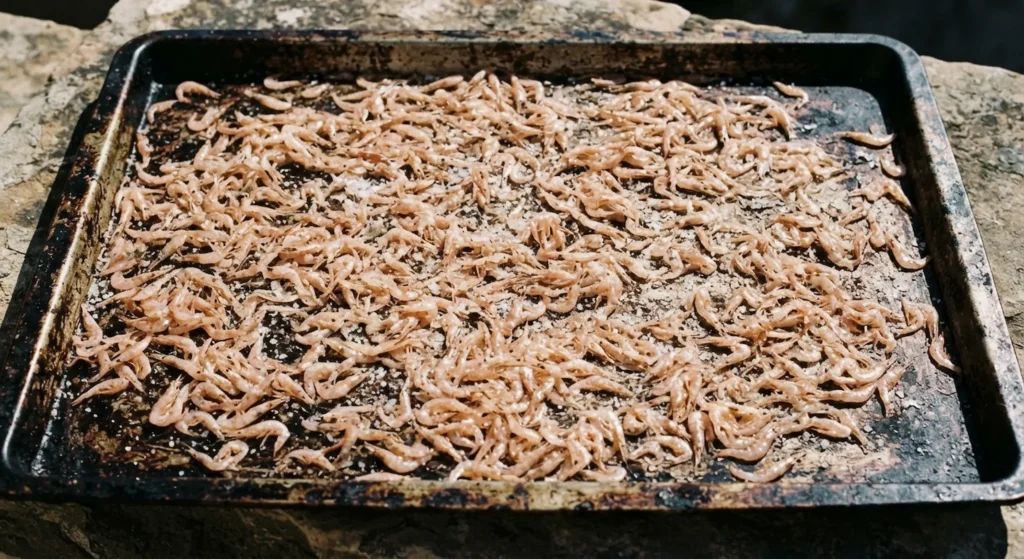
1 — Salt and spread. Mix the camarones with the salt and spread in a single layer on a tray. Cover with fine mesh or muslin to keep insects off.
2 — Sun-dry. Leave in full sun for 2 days, bringing the tray inside overnight. By the end of day two the camarones should be dry, slightly shrunken, and starting to smell distinctly fermented. At 29°C this happens reliably.
3 — Blend. Transfer to a blender or food processor and blitz to a rough paste. Add a few drops of water only if needed to help it come together — keep it as dry as you can.
4 — Ferment. Press the paste into a small sealed jar and leave at room temperature for 2 to 3 days. It will darken slightly and the smell will intensify. That is what you want.
5 — Use or refrigerate. Once fermented, use immediately or store in the fridge. It will keep for several weeks.
This small batch is enough for the gaeng hang le recipe and a little more. Scale up if you want a jar worth keeping.
If you've enjoyed the recipes, you can buy me a coffee ☕ — it helps keep the site going.
FOOTNOTE:
This homemade shrimp paste is part of my Nearly Series — homemade versions of the jars and packets that define a well-stocked kitchen — and my Spice Blends & Condiments collection. Find the full collection at Recipe Hubs.
Find more recipes and food adventures here.
Wonky photos, proper condiments, genuine adventures — The Flexible Chef