Ancient Greek Recipes — Skordalia-Style Barley Purée
Archestratus of Gela — 4th century BC Greek poet, sometimes called the world's first food writer — had strong opinions about ancient Greek recipes. All of them. His view was simple: good ingredients, simply treated, left largely alone. Hedypatheia — "Life of Luxury" — the poem in which he set out his philosophy, reads less like a recipe collection and more like a strongly worded letter to anyone who had ever over-complicated a perfectly good piece of fish. A pounded barley and garlic purée is exactly his kind of food.
Barley was the everyday grain of ancient Greece — more common than wheat for most of the population. Maza, an unleavened barley flatbread, was what most Greeks ate most days. Olive oil, garlic, vinegar — the flavour palette is immediately recognisable as Greek, and it has barely shifted in two and a half thousand years.
The most famous of the ancient Greek recipes to survive intact is skordalia — still on every taverna menu in Greece today — is made with bread or potato, garlic, olive oil, and vinegar. The ancient version used barley. Same pounding technique, same sharp garlic and oil base, same vinegar finish. The taverna dish you already know is a direct descendant of this one.
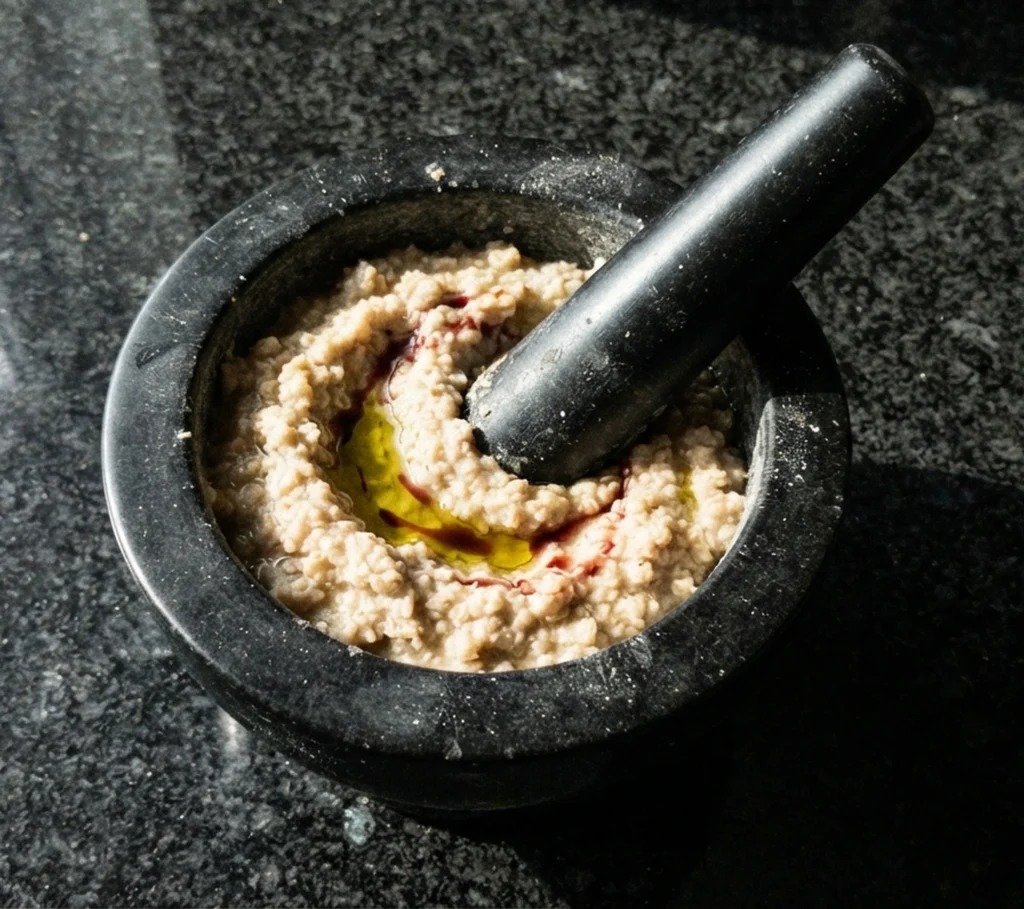
The flexible angle on these ancient Greek recipes is modest. Pearl barley cooked until very soft, then pounded in a black granite mortar and pestle with garlic and sea salt until as smooth as you can get it — which won't be completely smooth, and shouldn't be. Olive oil worked in gradually, red wine vinegar to finish. Barley flour makes a quicker alternative if you want something smoother, but the texture of pounded pearl barley is more interesting and more honestly ancient. Lemon juice works in place of red wine vinegar if you prefer — defensible, and what most modern skordalia recipes use.
Ancient Greek Recipes — Skordalia-Style Barley Purée
Ingredients
- 60g pearl barley
- 2 garlic cloves, crushed
- 3 tbsp olive oil
- 1 tbsp red wine vinegar
- Sea salt to taste
To serve:
- The Greeks used barley flatbread (maza) — barley flour makes the most authentic version here. Spelt flatbread works well too — recipe here.
Method
- Rinse the pearl barley and cook in plenty of unsalted water for 40–45 minutes until very soft — much softer than you'd cook it for a stew. Drain well and leave to cool slightly.
- Transfer the barley to a mortar and pestle. Add the crushed garlic and a pinch of sea salt and pound steadily until the mixture breaks down into a rough paste. It won't be completely smooth — that's fine. Keep going until there are no whole grains left.
- Work in the olive oil gradually, a tablespoon at a time, pounding and stirring between each addition until the oil is fully absorbed and the purée has some body.
- Add the red wine vinegar and pound again briefly. Taste and adjust — more salt, more vinegar, more oil as needed. It should be sharp, garlicky, and rich.
- Serve at room temperature with spelt flatbread alongside.
Archestratus spent his life travelling the Mediterranean arguing that good ingredients needed almost nothing done to them. A handful of cooked barley, garlic, olive oil, vinegar, pounded together. He was right then. He's still right.
Footnote:
This ancient Greek barley purée is featured in my Cooking Through History hub, where I cook my way through the ancient world — from Mesopotamian flatbreads to Medieval English pottage.
You'll also find it in my Fish & Seafood Recipes hub and my Gut Health Recipes collection — real food from a rural Andalucían kitchen, built around fermented foods, high-fibre pulses, wholegrains and prebiotic-rich ingredients.
Find more recipes and food adventures here.
Wonky photos, proper food, genuine adventures — The Flexible Chef