
Blank Mang — Spiced Chicken from the Forme of Cury
This blank mang recipe comes from the Forme of Cury — compiled by the master cooks of Richard II around 1390 and one of the oldest surviving English cookbooks. Chicken poached in almond milk, spiced with ginger, thickened with rice flour, and finished with a whisper of sugar. Sweet-savoury in a way that feels almost Moroccan. It probably isn't a coincidence — medieval European cooking was deeply influenced by Arab culinary tradition, and the spice routes made ginger, almonds, and sugar the markers of serious, expensive cooking.
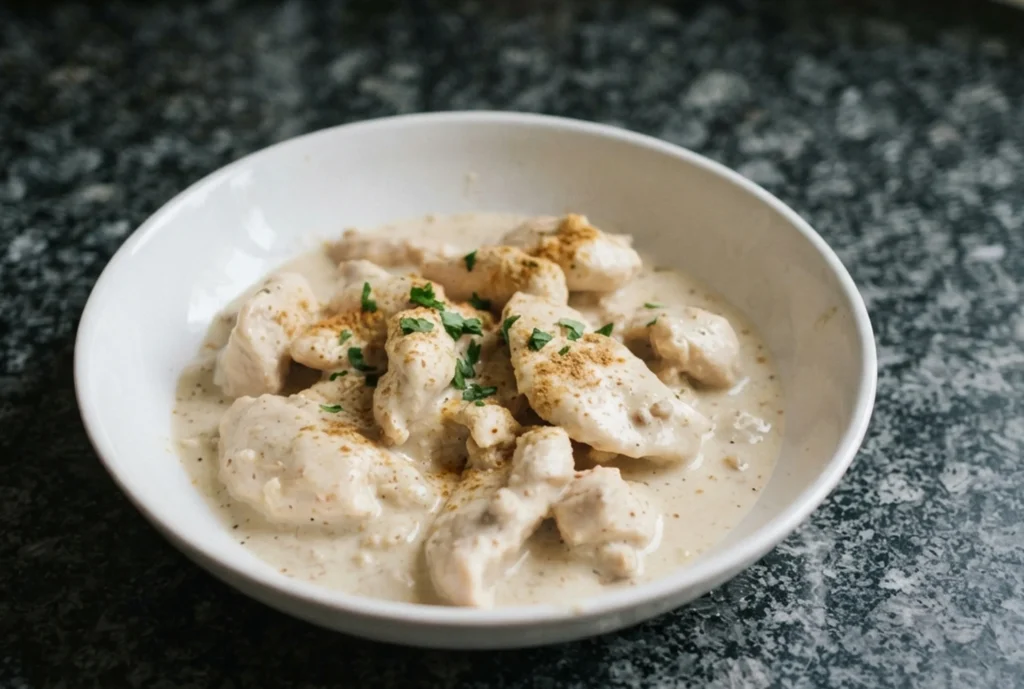
This is a flexible makeover. Two chicken breasts, one for now, one for the freezer. The sugar stays — just a teaspoon — because without it the dish loses something historically honest. You'd barely know it was there.
Serves 2
Ingredients
- 2 chicken breasts, diced into bite-sized pieces
- 500ml unsweetened almond milk
- 1 tsp ground ginger
- 1 tbsp rice flour
- 1 tsp sugar
- Flaky sea salt and white pepper
Method
Place the diced chicken breast in a pan in a single layer. Pour over the almond milk — it should just cover the pieces. Add the ground ginger, a good pinch of salt, and a little white pepper. Bring gently to a simmer and poach on a very low heat for 12–15 minutes, stirring once or twice, until the chicken is cooked through and the sauce has thickened slightly.
Thicken the sauce
Lift the chicken out and set aside. Mix the rice flour with a small splash of cold water to a smooth paste. Stir into the poaching liquid over a low heat and cook for 3–4 minutes, stirring, until the sauce thickens to a loose, creamy consistency. Stir in the teaspoon of sugar. Taste and adjust the seasoning.
To serve
Return the chicken to the pan to warm through. Serve with the sauce spooned over. Good bread alongside, or plain steamed rice — both would have been plausible on a medieval table, though the Forme of Cury would have known the rice well.
The Blank Mang Recipe — Medieval Palace Food
The Forme of Cury — the title simply means "The Method of Cooking" in Middle English — was compiled around 1390 at the court of Richard II, reputedly the most lavishly fed monarch in medieval England. His kitchen employed around three hundred cooks. Blank Mang — from the French blanc manger, meaning white food — appears across medieval European cookbooks, always built around pale, expensive ingredients: white meat, almond milk, rice, sugar, and ginger. The whiteness wasn't accidental. It signalled wealth, refinement, and access to the spice trade.
The almost-Moroccan quality of the finished dish isn't a coincidence. Medieval European cooking, particularly at the court level, was heavily shaped by Arab culinary tradition filtering through trade routes and the Crusades. Ginger, almonds, and sugar arriving together in a single dish is a signature of that influence. Andalucía, of course, knows this story well.
This medieval chicken recipe is featured in my Cooking Through History hub, where I cook my way through the ancient world — from Mesopotamian flatbreads to Medieval English pottage.
You'll also find it in my Chicken Recipes hub.
Find more recipes and food adventures here.
Wonky photos, proper food, genuine adventures — The Flexible Chef


