
Hake and Langoustine Stew — Catalan Style with Saffron & Almonds
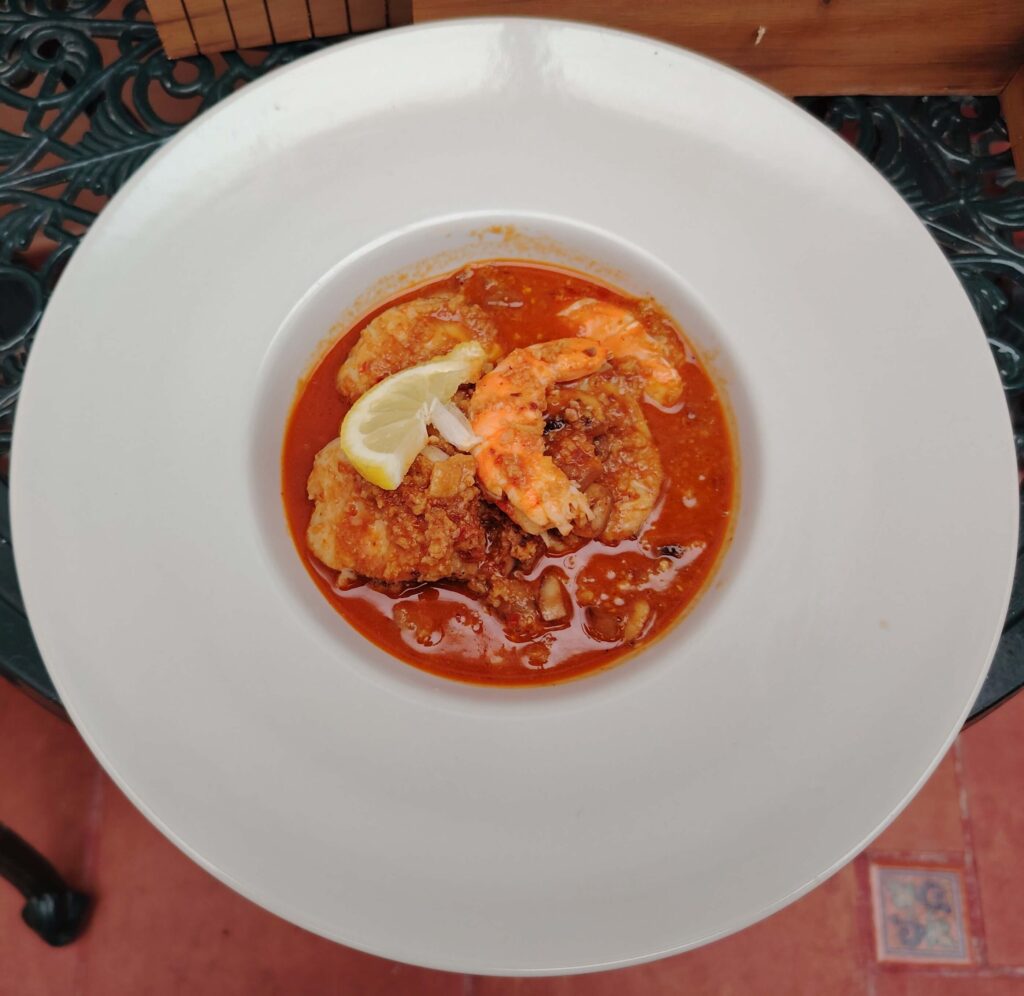
There's nothing quite like a Friday in the village. Martha's store puts out fresh fish once a week, and if you're not there early enough, you miss it. This week I picked up a whole pescada and three fat langostinos — and by the time I got home I already knew I was making a hake langoustine stew. A Catalan-style suquet, as it turned out — golden with saffron, thickened with almond picada, and built on a shell stock that takes ten minutes and transforms the whole dish.
For anyone unfamiliar with Spanish fish counters, pescada is hake. The species is merluza, but pescada tends to refer to the chunkier, market-ready cuts you'll find at a village store like Martha's. It's the same mild, flaky white fish many UK cooks will know – just with a better provenance and a fraction of the price.
Then there were the langoustines.
Martha's counter had them labelled as langostinos — the everyday Spanish word for large prawns. It's a term that covers a fair range, and what I picked up were big, sweet, shell-on beauties with plenty of flavour still locked in the heads. In the UK, you'd call them langoustines. In more formal Spanish, the true langoustine is a cigala — a clawed crustacean closer to a small lobster — but at a village fish counter, langostino is what you'll see on the label, and these were exactly what I needed.
I had three of them and a good piece of hake, and I wanted to make something that did justice to both. The result is a Catalan-style suquet — a loose, saffron-golden seafood stew thickened with a simple picada of toasted sourdough, almonds, and garlic. The langoustine shells and heads go into a quick stock with chicken stock as the base, and that's where most of the flavour comes from.
It looks like a restaurant dish. It isn't difficult.
What makes this hake langoustine stew — the shell stock
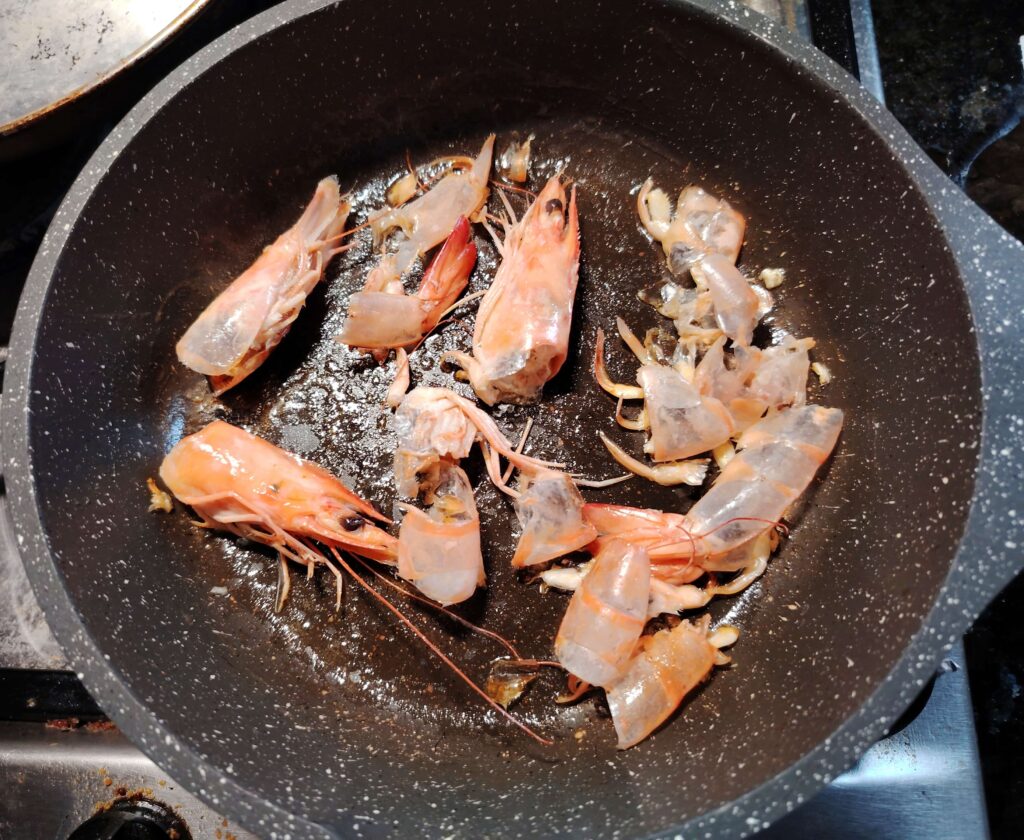
Don't throw them away. The shells and heads of langoustines carry an extraordinary amount of flavour – sweet, briny, and deeply savoury. Toasted briefly in olive oil and simmered with chicken stock and a splash of white wine, they produce a stock that forms the backbone of the whole dish. It takes ten minutes and makes all the difference.
Ingredients (serves one generously)
- 2 thick hake (pescada) steaks or chunks, skin on
- 3 langoustines (langostinos), shells and heads reserved
- 4 white mushrooms, sliced
- 300ml chicken stock
- 3 cloves garlic, finely sliced
- Olive oil
- ½ tsp sweet smoked paprika
- A small pinch of saffron threads
- 2 small pieces of sourdough bread, torn
- A small handful of blanched almonds
- Optional: a splash of dry white wine, flat-leaf parsley, lemon
Method
1. Bloom the saffron Soak a small pinch of saffron in 2–3 tbsp of warm chicken stock. Set aside while you prep everything else. Even five minutes makes a difference to the colour and aroma.
2. Make the shell stock Peel the langoustines and set the meat aside. In a little olive oil over a medium heat, cook the shells and heads for 2–3 minutes, pressing them down until they turn fragrant and deepen in colour. Add a splash of white wine if using, let it reduce for a minute, then pour in the chicken stock. Simmer gently for 5–7 minutes, then strain through a sieve, pressing the shells hard to extract every last drop of flavour. You should have around 250ml of deeply flavoured stock.
3. Make the picada Toast the sourdough pieces and almonds in a dry pan until golden. Transfer to a pestle and mortar with one clove of garlic and a small drizzle of olive oil. Pound to a rough paste – it doesn't need to be smooth. This is what thickens and enriches the stew.
4. Build the base In a wide pan, warm a generous glug of olive oil over medium heat. Add the remaining garlic and cook until just softened and fragrant — don't let it colour. Add the mushrooms and cook for 5–6 minutes until browned and any moisture has cooked off. Stir in the paprika and let it cook for 10–15 seconds. If using wine, add a splash now and reduce by half.
5. Add the stock and saffron Pour in the shell stock and the saffron infusion. Stir, taste, and adjust the seasoning. Simmer gently for 5–10 minutes to let everything come together.
6. Cook the hake Season the hake lightly with salt. Nestle the pieces into the simmering stew and cook for 4–5 minutes, turning once, until just flaky. Don't rush this — overcooked hake falls apart and loses its texture.
7. Stir in the picada Add the picada and stir through. The stew will thicken slightly — not heavily, just enough to give it body. Simmer for 2–3 minutes.
8. Finish with the langoustines Add the peeled langoustine tails and cook for no more than 30–60 seconds, just enough to warm them through. Any longer and they toughen.
9. Rest and serve Squeeze over a little lemon juice; drizzle with good olive oil and scatter with parsley if you have it. Let the stew sit for a couple of minutes before serving – it settles, and the flavours deepen noticeably.
This hake langoustine stew is best eaten immediately — it doesn't keep well, and it doesn't need to.
A few notes
The picada is a Catalan technique – a paste of bread, nuts, and garlic used to thicken and flavour stews rather than cream or flour. It's central to suquet, a traditional Catalan fisherman's stew with a long history on the Costa Brava. Wikipedia has a good overview of suquet if you want to dig into the background.
The picada is what gives this hake langoustine stew its body and depth.
Saffron is the same — a pinch is enough. More doesn't mean better; it means bitter.
And the shell stock really is the heart of this dish. If you're tempted to skip it and just use plain chicken stock, don't. Those ten minutes make it something else entirely.
For something simpler, Andy's pan fried hake from Gran Alacant is the same fish cooked with complete restraint — a hot pan, good olive oil, and five minutes.
This recipe is part of my Fish Hub — a growing collection of fish and seafood recipes from Andalucía and the road.
It also features in my Spanish Recipes collection — regional classics, tapas, seafood, rice dishes and food cooked from Andalucía and the road.
Wonky photos, proper food, genuine adventures — The Flexible Chef


