Pâté & Rillettes Recipes — The Flexible Chef's Complete Collection
Some of the best homemade pâté recipes I know take almost no time to make and keep for days. A smooth chicken liver, a rough-textured rillette, a no-cook cheese spread blitzed in five minutes — all of them better the next day, all of them ready when you need them, and all of them considerably more impressive on the table than the effort involved would suggest. Pâté, if you're new to it, is a rich, spreadable paste of meat, fish or vegetables blended with fat — and homemade pâté recipes are easier than most people think.

My relationship with pâté runs through two places. The first is the Limousin, where I ran a restaurant in the Haute-Vienne and learned that potted meat is not a starter so much as a way of life. Rillettes arrived with the bread basket as a matter of course. The butter seal on a chicken liver pâté was not a flourish — it was practical, a way of keeping something good for longer. The second place is Andalucía, where I've lived for the last fourteen years, and where the Spanish instinct for no-cook spreads — a blitzed Manchego, a piquillo pepper and almond paste, an artichoke and AOVE — has given the collection an entirely different character.
The result is a hub that sits at the intersection of two food cultures. The French pâtés lean rich and classical. The Spanish ones are faster, brighter, and largely vegetarian — which makes them useful when friends arrive and not everyone eats meat. Both travel well in a jar, which means they earn their place in Florie too. A pot of rillettes, a baguette, and a handful of olives is a very good van lunch wherever you happen to be parked in the Iberian Peninsula.
The butter seal is worth mentioning here because it appears in several of these homemade pâté recipes and it genuinely matters. A thin layer of clarified or plain melted butter poured over a finished pâté and left to set in the fridge excludes the air, slows oxidation, and extends the life of the pâté by several days. It is one of those techniques that looks like decoration and is actually doing structural work.
Everything here is made to be eaten at room temperature, spread generously, and shared without fuss.
Homemade Pâté Recipes — From the Limousin to Andalucía.
Meat Pâtés & Rillettes
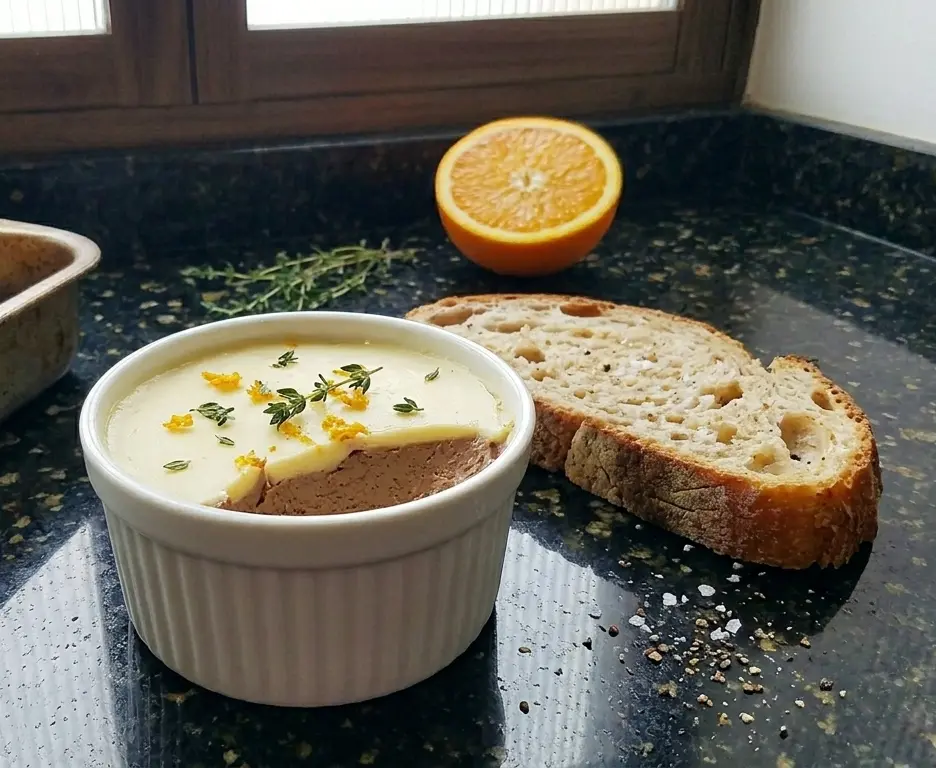
The French classics in this collection of homemade pâté recipes. All three are better made a day ahead, all three benefit from a butter seal, and all three will earn their place on any table — whether that's a dinner party in Casa Adora or a board of bread and cornichons eaten in the van.
Chicken Liver Pâté with Orange — Smooth, rich, and lifted by orange. The one that converts people who think they don't like liver.
Kevin's Luxurious Chicken Liver Parfait — A step up from the pâté. Silkier, more indulgent, and worth the extra effort for a proper occasion.
Turkey Rillettes — Inspired by a pork rillettes memory from a restaurant near the slaughterhouse in Limoges. Turkey stands in for pork and makes a very convincing argument for itself.
Potted Hough — A Glasgow Classic Made with Veal
Veal shin slow-cooked until it falls from the bone, packed into a ramekin with reduced, heavily seasoned stock and left to set overnight. Glasgow working-class food — eaten cold on toasted sourdough.
Fish Pâtés & Rillettes
Fish pâtés are underrated. They come together quickly, keep well, and work as a starter, a van lunch, or the kind of thing you put on the table with drinks and bread when people arrive earlier than expected. Some of the most versatile homemade pâté recipes in this collection are in this section.

A Quick Smoked Salmon Pâté — The one you make when you need something good in ten minutes.
The Ultimate Tuna Pâté (Two Ways) — From the store cupboard. Two versions, both better than the sum of their parts.
Sardine Rillettes Recipe — Recreating Le Bistrot de Halles in Limoges, twenty years on. Real Conservera Española sardines from the Galician coast, fork-mashed with fresh cheese, shallot, parsley and cayenne. The kind of thing you'd order on a blackboard menu and immediately want to make at home.
Bonito Pâté with Pickled Guindilla Peppers — The Spanish answer to the fish rillette. Bonito and guindilla is a classic Basque pairing.
Pâté de Boquerones con Ajo Suave — Anchovies and soft garlic. Punchy, deeply savoury, and a little goes a long way.
Hot-Smoked Trout Pâté with Capers & Lemon — A sharper, brinier take on James Martin's version. Capers, lemon and smoked paprika, made for one ramekin and ready in five minutes.
Nearly Fortnum's Potted Mackerel — Tinned mackerel, bio ghee, lemon, parsley and smoked paprika. The potted fish tradition, twenty minutes, one small jar. Fortnum's would charge considerably more.
Potted Prawns Recipe — Spiced Langostinos in Ghee — Langostinos from an Andalucían market, spiced with mace and cayenne, sealed under bio ghee. The Morecambe Bay tradition, made in rural Jaén.
Smoked Trout Recipe — Potted with Caraway, Dill & Lemon — Cold-water trout from the mountain rivers of northern Spain, potted with caraway, crushed dill seeds and lemon zest. Clean, slightly Scandinavian, and considerably better than it has any right to be from one small jar.
Cheese & Vegetable
The mostly no-cook homemade pâté recipes. Mostly Spanish, genuinely useful if not everyone at the table eats meat, and made quickly from ingredients that are usually already in the fridge or store cupboard. These are the spreads that get made fast and disappear faster.

Manchego and Sun-Dried Tomato Pâté — Rosa's suggestion after seeing the French Recipes hub. Manchego, sun-dried tomatoes, pimentón ahumado, fresh parsley. Five minutes, one ramekin.
Mushroom & Walnut Pâté — Earthy, rich, and convincing enough that nobody asks where the meat is.
Chickpea Pâté for One (Two Ramekins) — Chickpeas warmed in their own liquor with ghee, garlic, smoked paprika and cumin, then mashed with a fork. One pan, no blender, two ramekins. Swap the ghee for olive oil and it's vegan.
Pâté de Pimientos del Piquillo y Almendras — D.O.P. Lodosa piquillo peppers and pre-toasted Marcona almonds, blitzed in the van in Navarra. Bright, slightly sweet, and ready in five minutes.
Pâté de Alcachofa y AOVE — Artichoke hearts preserved al natural and Andalucían extra virgin olive oil. Simple, elegant, and a reminder that the best ingredients need the least done to them.
Chestnut and Mushroom Pâté — Porcini, girolles and chestnuts, coarsely textured and butter-sealed. Inspired by a memory of an Alsatian patron's recipe from the Haute-Vienne — autumn in the Limousin in a ramekin.
Game Pâtés
The hare came from a neighbour, as they often do in rural Andalucía. Hunting is a way of life here, and a frozen hare is not an unusual thing to find at the back of the freezer. This is the game section of the homemade pâté recipes — coarser, earthier, and worth the overnight marinade.

Hare Pâté with Juniper & Osborne Brandy — Inspired by Simon Hopkinson's rabbit terrine from Roast Chicken and Other Stories. Juniper, Osborne brandy, pancetta-lined, coarse-textured. Rabbit works just as well if that's what you have.
A Short Guide to Homemade Pâté Recipes
What is pâté?
At its most basic, pâté is a savoury paste — meat, fish, or vegetables blended or processed to a spreadable consistency, usually with fat of some kind to carry flavour and give it body. The word is French, but the idea is universal: a way of using offal, leftovers, and cheaper cuts and turning them into something worth spreading on good bread. In France it became an art form. In the Limousin, where I ran a restaurant for a couple of years, it was simply something you put on the table without thinking about it. The homemade pâté recipes in this collection cover that whole spectrum.
Pâté, parfait, terrine, rillettes — what's the difference?
They're related but not the same thing.
A pâté is the broad category — a smooth or coarsely textured mixture, usually liver-based, blended with fat and seasoning. It can be rustic or refined depending on how far you push the texture.
A parfait is pâté's more ambitious cousin. The mixture is passed through a fine sieve, the ratio of butter is considerably higher, and the result is a texture closer to mousse than paste — rich, airy, and frankly quite hard to stop eating. Kevin's parfait is the example here.
A terrine is cooked in a loaf-shaped mould (the terrine itself) and served sliced rather than spooned. It tends to be chunkier than a pâté — you might find whole pieces of meat, fat, or other additions running through it.
Rillettes are the odd one out in texture terms — the meat (traditionally pork or duck, though the sardine and turkey versions here prove the point) is cooked slowly in fat, then pulled apart and packed into the fat rather than blended. The result is spreadable but deliberately rough-textured.
Can you freeze pâté?
The pâté recipes here vary in how well they freeze. Most homemade pâté recipes freeze well, though with caveats.
Meat-based pâtés — chicken liver, turkey rillettes — freeze well. Seal the surface with a butter or olive oil layer first, wrap tightly, and use within about a month for best results. Thaw overnight in the fridge.
Fish pâtés are more variable. The smoked salmon pâté here freezes reasonably well; the boquerones version is better eaten fresh.
Rillettes, packed in their own fat, are natural candidates for freezing — the fat acts as a preservative in the fridge anyway, so the freezer is just an extension of that logic.
Vegetable pâtés — the piquillo pepper and artichoke versions here — are best made fresh. The texture can turn grainy after freezing.
Game pâtés — the hare version here — freeze well. The coarse texture holds up better than a smooth liver pâté after freezing. Wrap tightly and use within six weeks.
The bread question
The right bread depends on the pâté recipe. Sourdough is the answer, if you want one. The slight acidity cuts through the richness of a chicken liver pâté in a way that a neutral white bread simply doesn't. A properly crusted slice, not too thick, gives you something to push against.
That said, spelt crackers deserve a mention — they have enough flavour to hold their own alongside the more delicate fish pâtés and the vegetable ones, without overwhelming them. Melba toast is the classic pairing for a smooth parfait. Rye works well with the rillettes.
If you'd like to bake your own, the Bread Recipes hub has the full collection — sourdough included.
Wine and beer
White wine is the default for most pâtés — something with enough body to match the fat but enough acidity to cut it. A white Rioja works well with the chicken liver versions, or a Verdejo from Rueda if you want something crisper. For the fish pâtés, Albariño is the obvious answer. For something with more character alongside the parfait specifically, an Amontillado or dry Oloroso sherry — the oxidative, nutty notes work with the richness in a way that a straight white wine doesn't always manage.
For the vegetable pâtés — the piquillo pepper especially — a light, dry rosé from Navarra (which is where the piquillos come from) is hard to argue with.
Beer is an underrated pairing. A malty amber ale alongside a chicken liver pâté, or a wheat beer with the smoked salmon — both work better than they have any right to.
For the rillettes, Muscadet sur lie is the traditional French answer, and it's the right one.
For the game pâté, a robust red — a Monastrell from Jumilla or a Garnacha from Campo de Borja. Something with enough backbone to stand up to the juniper and the hare.
This collection is part of French Recipes — for the classical French pâtés and rillettes — and Game Recipes for the hare pâté.
Find more recipes and food adventures here.
If these pâtés have stocked your fridge, you can buy me a coffee ☕ on Ko-fi.
Browse all recipe collections at The Flexible Chef's Complete Hub Guide.
Wonky photos, proper food, genuine adventures — The Flexible Chef