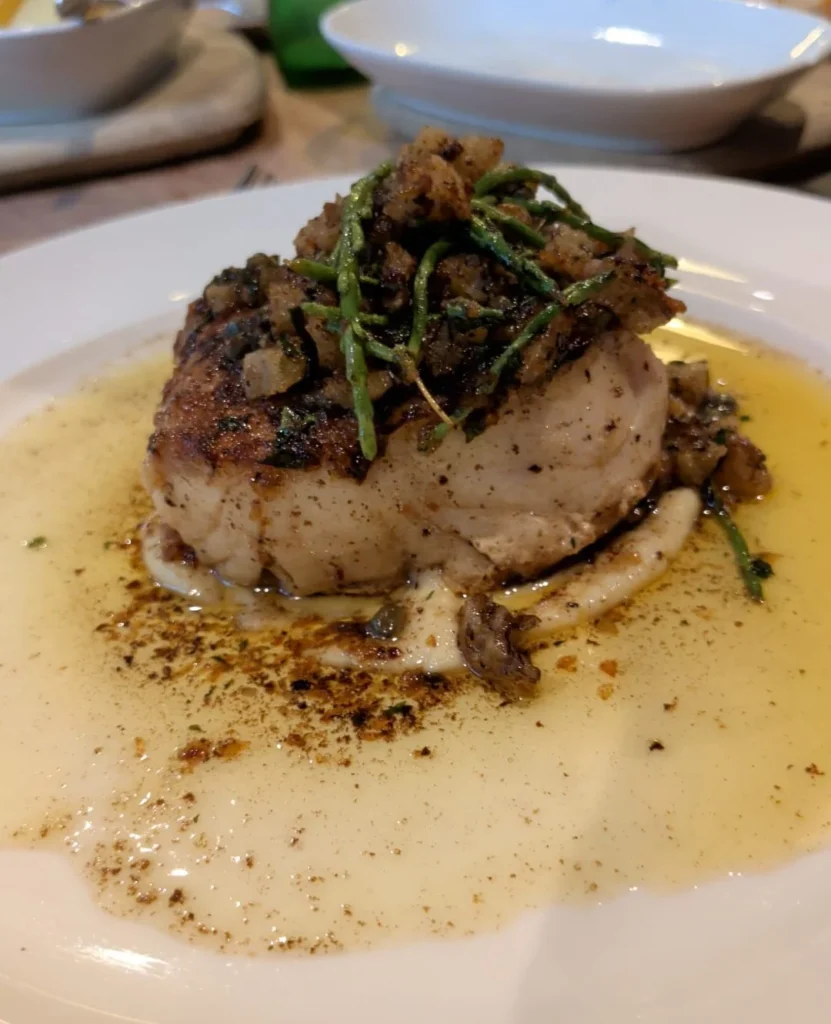
Danny's Cornish Hake with Potatoes, Capers and Samphire
My son Danny lives in Cleethorpes, about three miles from Grimsby fish market, and he's there most weeks.. Every August he drives south through Spain with his wife and daughter, and we meet for a week at the Parador in Mojácar. We eat fresh fish from Garrucha, drink good wine, and talk about food. This recipe came out of one of those conversations.
Danny doesn't follow recipes and he doesn't measure anything. What he does do is buy serious fish and treat it with respect. This Cornish hake fillet — pan-seared hard, finished on a bed of sliced potatoes with capers, samphire and olive oil — is a good example of how he thinks about cooking. It's a complete Cornish hake recipe — one pan, half an hour.
Why Cornish Hake?
The merluza on every Spanish restaurant menu and the Cornish hake Danny brings home from Grimsby market are the same fish — European hake, Merluccius merluccius, caught in the same Atlantic waters off the coast of Britain and Ireland. Spain has always known what to do with it — as I wrote in Hake Recipes Spain: Why Merluza is King in Rural Andalucía, in the Basque country they poach it in a garlic and parsley sauce, in Andalucía they fry it in light batter and eat it standing up at a market stall. Britain, for reasons best left unexamined, largely ignored it for decades in favour of cod.
That's changing, and this Cornish hake recipe is a good example of why. Cornish hake in particular has a strong sustainability story — carefully managed inshore stocks, Marine Stewardship Council certification, and a Cornwall IFCA that has been doing the right thing for long enough that the fish are now genuinely plentiful and the quality is excellent. It's firm, white and mildly sweet, with none of the flakiness that makes some white fish difficult in a hot pan. Danny buys it thick — a round fillet cut from a proper-sized fish, the kind that's hard to find outside a good market. The thickness matters, because it's what allows that deep, hard crust to form on the outside while the centre stays just cooked through and pearlescent.
Samphire — When You Can Get It
Danny adds samphire when he can get it, and if you're near a fishmonger or a good market in spring or early summer, you should too. Marsh samphire — the bright green, crunchy kind — has a natural saltiness that pairs perfectly with white fish and means you barely need to season the dish at all. It wilts quickly in the pan and needs almost no cooking. If samphire isn't available, a handful of capers on their own will carry the dish without it.
This Cornish hake recipe is straightforward — the technique is the whole point.
Cornish Hake Recipe
Serves 1 | One pan | 30 minutes
Ingredients:
- 1 thick Cornish hake fillet, skin on (around 200g)
- 2 medium waxy potatoes, peeled and sliced to about 3mm
- 2 tbsp olive oil, plus extra to finish
- 1 tbsp capers, drained
- A handful of samphire, rinsed (or extra capers if unavailable)
- Salt and black pepper
Method:
Par-cook the potato slices in salted boiling water for about 5 minutes — they want to be almost tender but still holding their shape. Drain and set aside.
Heat a tablespoon of olive oil in an ovenproof frying pan over a high heat. Season the hake fillet on both sides. When the oil is shimmering, place the fillet skin-side down and press it gently to stop it curling. Cook for 3–4 minutes without moving it until the skin is deep golden and crisp.
While the fillet is searing, arrange the par-cooked potato slices in a single layer in a baking dish. Drizzle with olive oil, season lightly and place in an oven preheated to 200°C. Give them 5 minutes to start taking on a little colour.
Flip the hake, sear the flesh side for a minute, then transfer it onto the potato bed. Scatter the capers and samphire over and around the fish, drizzle generously with olive oil and return everything to the oven for 8–10 minutes until the hake is just cooked through — it should be opaque to the centre with no translucency remaining.
Finish with a little more olive oil poured directly over the fish at the table. That's all it needs.
For a simpler treatment, Andy cooks pan fried hake at the family holiday home in Gran Alacant — olive oil, salt and pepper, nothing more needed.
If you want to take hake somewhere more elaborate, my Hake and Langoustine Stew with Saffron and Almonds is worth an afternoon.
If you haven't seen what he does with a whole turbot, his whole turbot with capers and parsley is worth your time. His roasted monkfish with cherry tomatoes and capers, his grilled John Dory with capers, parsley and garlic, his tandoori halibut with cucumber and herb yoghurt, and his cataplana with cod, clams and chorizo all follow the same logic.
This Cornish hake recipe is part of my Fish & Seafood Recipes hub — fish and seafood dishes from the coast and the kitchen.
Find more recipes and food adventures here.
Wonky photos, proper food, genuine adventures — The Flexible Chef